January 26, 2026

CAM Reconciliation & NNN True-Ups Continued.....
In Part 1, we shared a tenant-side checklist for reviewing CAM reconciliations and NNN true-ups—what to audit, where mistakes hide, and how to spot red flags before paying.
This post is the other half of the equation.
If you’re a landlord or property manager, the CAM reconciliation is one of the highest-leverage moments of the year. Done well, it builds trust, speeds up collections, and reduces the time you spend defending charges. Done poorly, it creates disputes, delayed payments, and a lease relationship that stays tense all year.
Here’s a January checklist to make your CAM reconciliation / NNN reconciliation clean, supportable, and easy to understand.
What is a “true-up” (from the landlord side)?
During the year, tenants typically pay estimated monthly CAM/NNN charges. After year-end, you compare:
- what was billed (estimates)
vs. - what was actually incurred (actuals)
The difference is the true-up—either a tenant owes more, or receives a credit.
Landlord January Checklist: What to Document to Avoid Disputes
1) Deliver a reconciliation package—not just a number
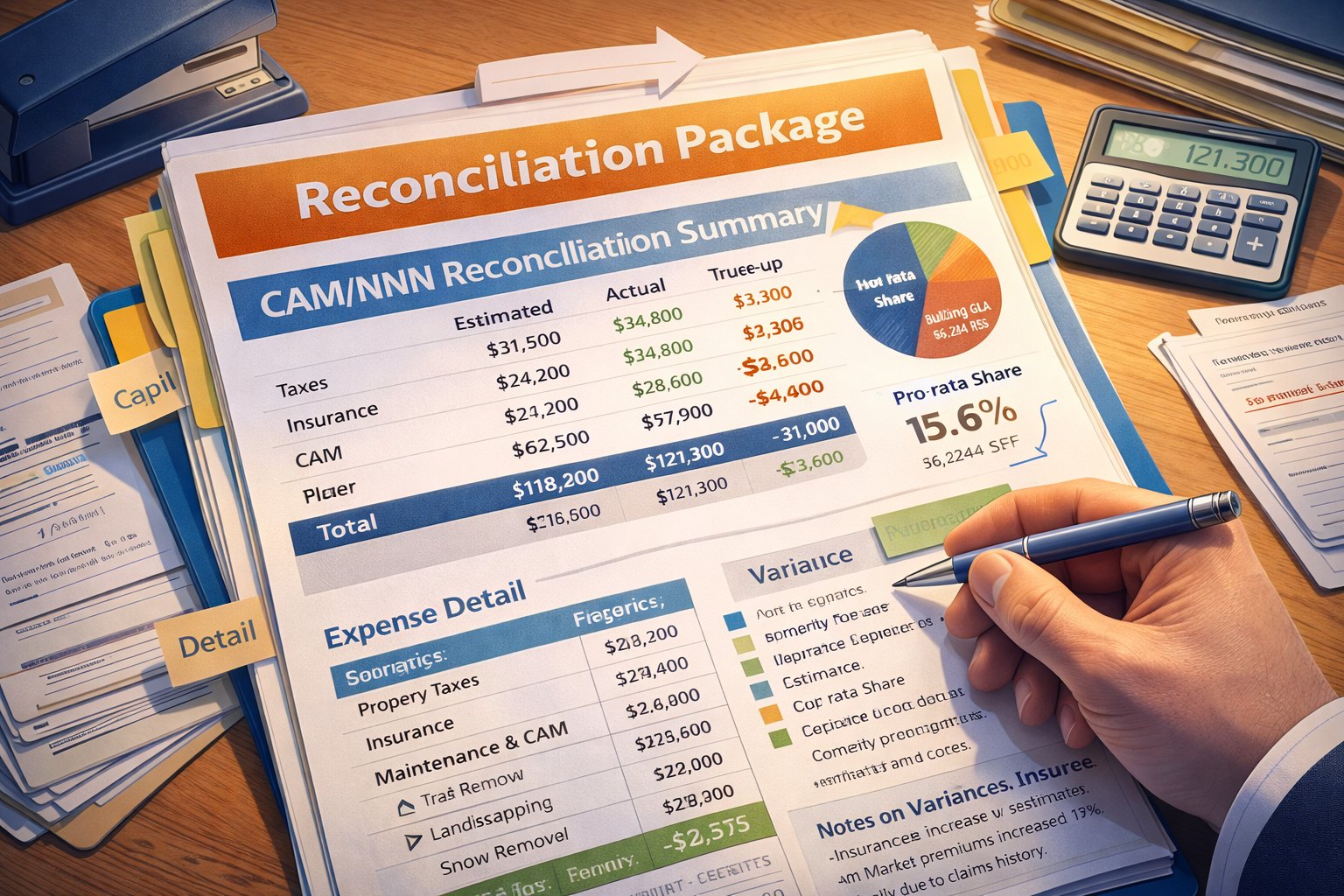
A good package includes:
- A one-page summary (estimated vs actual vs true-up)
- Expense detail by category
- Pro-rata share calculation (and building RSF/GLA used)
- Notes on major variances (what changed and why)
This “clarity-first” approach is consistently emphasized in CAM training and best-practice discussions.
2) Track recoverable vs non-recoverable from day one
Many conflicts happen because accounting categories don’t match the lease. Separate:
- recoverable CAM
- non-recoverable expenses
- capital vs operating
- tenant-specific vs shared expenses
If you sort it at reconciliation time, you’ll miss things and create gray areas.
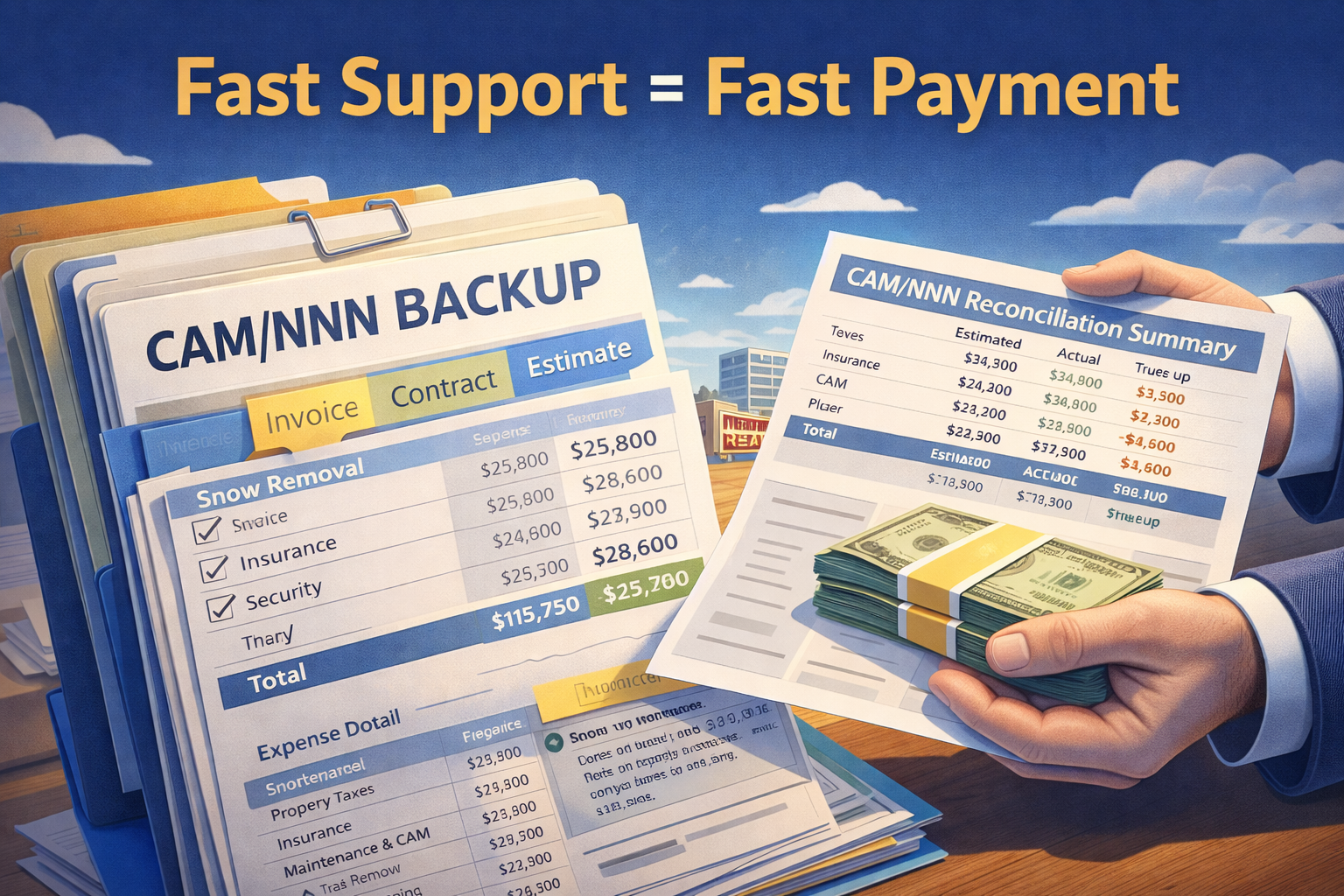
3) Prepare backup for the categories that matter
You don’t need to send every invoice automatically, but you should have support ready for:
- the largest categories
- unusual increases
- one-time items
- contracts that renewed mid-year
4) Treat capital items carefully (and explain the method)
If a cost is capital in nature:
- confirm the lease allows recovery
- amortize when required (and show the schedule)
- document useful life assumptions
- show any interest/financing only if allowed
Capital handled casually is the #1 way to trigger a dispute.
5) Document gross-up assumptions clearly
If you gross-up variable expenses:
- state the occupancy rate used
- list which expenses were grossed up
- show the calculation method
- keep it consistent with lease language
Gross-up is often valid. Unexplained gross-up looks like manipulation.
6) Explain big swings before someone asks
If insurance rose sharply or snow removal doubled, include a short note like:
- market premium increases
- claims history
- unusual winter events
- vendor pricing changes
- deferred maintenance finally completed
One paragraph here saves ten emails later.
7) Make the pro-rata share calculation unambiguous
Include:
- tenant RSF/GLA
- total building RSF/GLA
- resulting percentage
- whether the calculation includes vacant space, and how
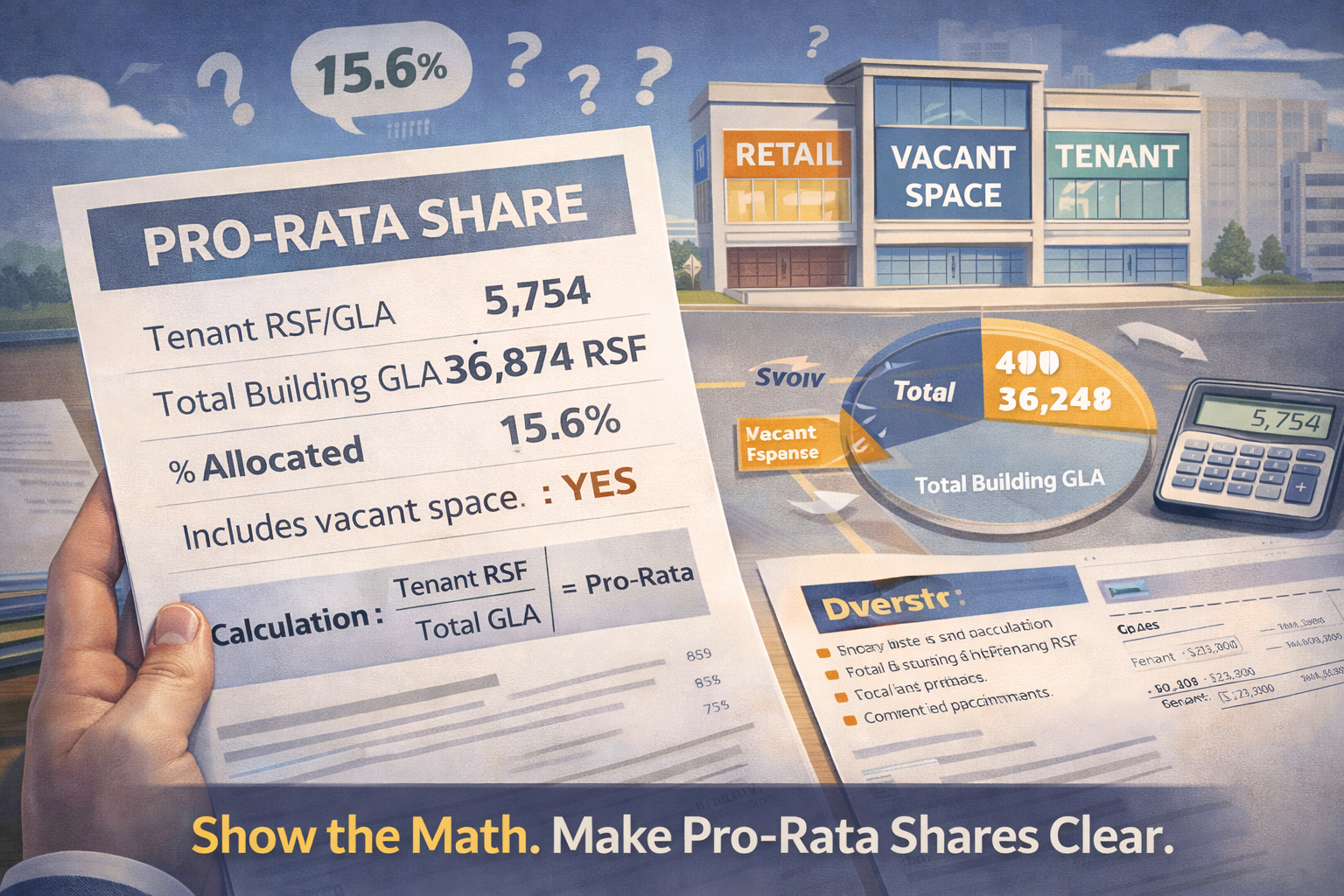
When tenants question the math, it’s usually because the math isn’t shown.
8) Use a consistent annual timeline
Set expectations early:
- when reconciliations are delivered
- when true-ups are due
- how disputes are handled
- who the point of contact is
Consistency reduces conflict even with tough tenants.
9) Have a simple, written dispute workflow
A clean process:
- Confirm the lease clause
- Confirm if the cost is recoverable
- Provide backup for that category
- If it’s a gray area, document the resolution for next year
This keeps disputes factual, not emotional.
10) Improve next year’s budget using this year’s friction
If tenants repeatedly dispute a category, it’s usually one of:
- unclear lease language
- unclear description in your reconciliation
- inconsistent accounting
- capital/operating confusion
Fix the system—not the argument.
Common CAM/NNN Dispute Triggers (Avoid These)
- Wrong RSF/GLA numbers or allocation pool
- Capital expenses billed as operating
- Unapproved admin/management fees
- Vague gross-up
- Tenant-specific expenses spread across all tenants
- No explanation for big swings
- Poor documentation or messy categories
Wrap-up (tying Part 1 + Part 2 together)
The best CAM reconciliations are simple: show the math, match the lease, and support the big numbers. When you do that, tenants can verify charges quickly, questions get answered fast, and true-ups get paid without drama.
And if you’re reading both posts: Part 1 (Tenants) helps tenants review reconciliations intelligently, while Part 2 (Landlords) helps landlords present reconciliations clearly. When both sides follow the same playbook, CAM season becomes a process—not a fight.

REQUEST YOUR CONSULTATION