February 23, 2026

Texas Business Personal Property (BPP) Rendition
If you own or run a business in Texas and you have tangible assets (equipment, furniture, computers, inventory, etc.), there’s a good chance you’re expected to file a Business Personal Property (BPP) rendition with your local county appraisal district.
The standard deadline is April 15, and February is the perfect time to get organized so this doesn’t turn into a last-minute scramble.
What is a BPP rendition?
A rendition is a yearly report you file with the county appraisal district to disclose the business personal property you own (or control) in that county and, in many cases, provide a good-faith estimate of value.
*Important detail: you’re reporting what your business owned/used as of January 1 of the tax year.
What counts as Business Personal Property (BPP)?
In plain terms: tangible personal property used to produce income.
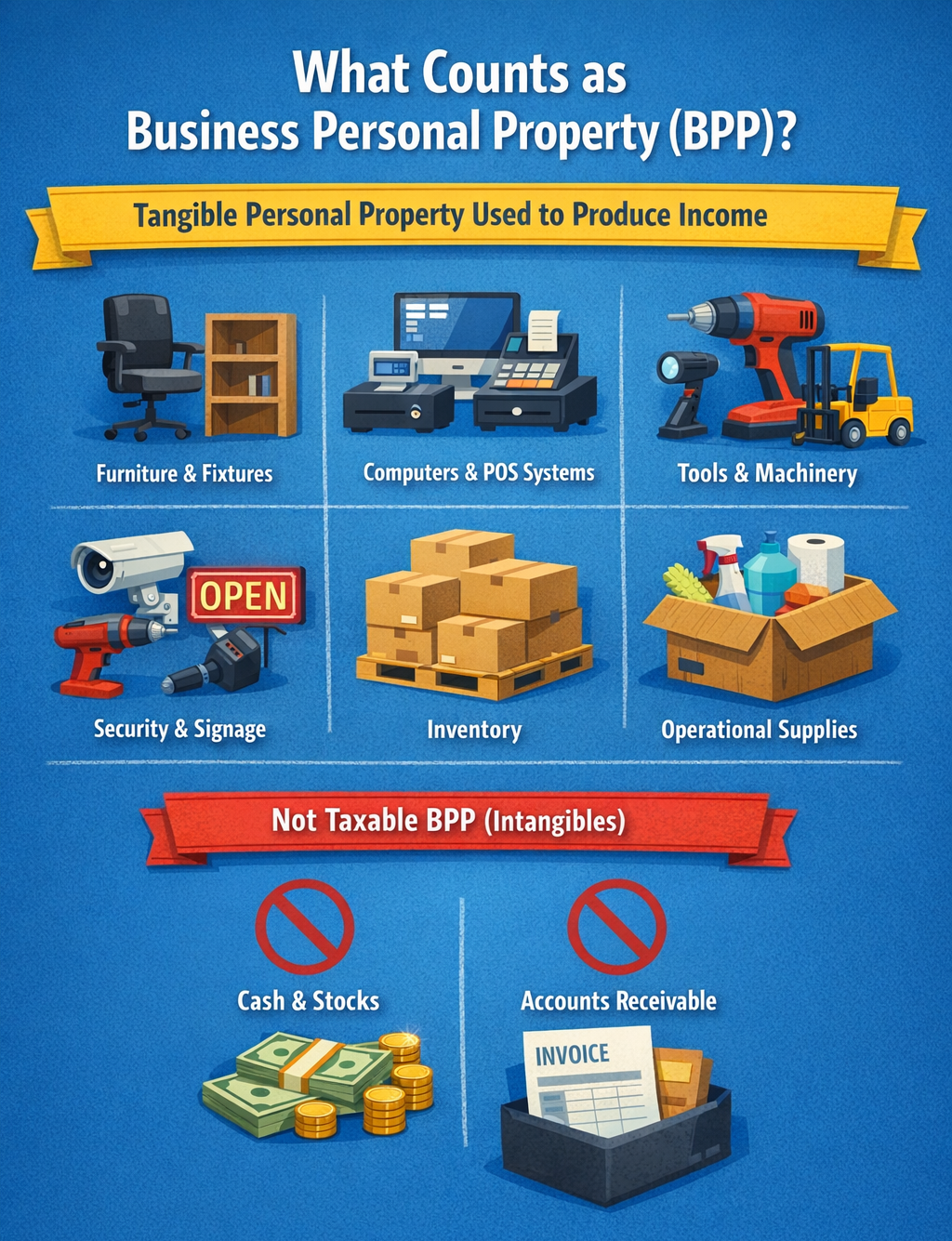
Common examples:
- Furniture, fixtures, shelving, display cases
- Computers, POS systems, phones, printers
- Tools, machinery, shop equipment
- Signs, security systems, cameras
- Inventory (in many cases—varies by business and local process)
- Supplies used in operations
Common non-examples (typically not taxable BPP):
- Intangibles like cash, stocks, accounts receivable
Who Should File?
Generally, anyone who owns tangible personal property used for the production of income in the county should file. This can include:
- The business that owns the assets
- The business that controls/manages the assets in certain fiduciary situations
Also: the business responsible for BPP taxes may not be the building owner (tenants often have their own BPP accounts).
If you operate in multiple locations, have a growing equipment list, or want fewer surprises when tax season hits, it helps to treat BPP like part of your broader asset management plan—not a once-a-year scramble. That means tracking where assets live, when they move, what gets disposed, and how those changes affect filings and budgeting.
Deadline, Extensions, and How They Work

Standard deadline
- File after January 1 and no later than April 15.
Extension options (get this in writing)
- If you request it in writing on or before April 15, the chief appraiser must extend the deadline to May 15.
- You may be able to get an additional 15 days if you request it in writing and show good cause.
Penalties for Missing or Messing Up the Rendition
Texas Comptroller guidance notes that filing late, incomplete, or not at all can trigger penalties—commonly described as 10% to 50% depending on the situation.
Many appraisal districts also reference a 10% penalty for failure to file or late filing under Texas Tax Code provisions.
Bottom line: even if you don’t love the process, it’s usually cheaper to file cleanly than to ignore it.
What to Prep Now (so April 15 is easy)

1) Confirm where you must file
BPP renditions are filed with the county appraisal district where the property is located/situs. If you have assets in multiple counties, you may have multiple filings.
2) Build your asset list as of January 1
Create (or export) a simple schedule that includes:
- Asset description (type + use)
- Location (address/county)
- Acquisition date
- Original cost (and/or current estimate)
- Disposals (what you no longer have)
Many districts accept a good-faith estimate of value or cost-based reporting depending on how you track assets.
3) Gather the core documents
Here’s the shortlist that usually makes this painless:
- Fixed asset ledger (from your accountant/bookkeeper or accounting system)
- Year-end depreciation schedule (even if you don’t file it with the rendition, it helps support values)
- Equipment invoices / big-ticket receipts
- Inventory snapshots (if applicable)
- Leases for equipment you use but don’t own (helps clarify ownership and responsibility)
4) Sort assets into “buckets” (faster + clearer)
Typical buckets:
- Furniture/fixtures
- Computers/IT
- Tools/equipment/machinery
- Leasehold improvements (note: treatment varies—don’t guess; follow local guidance)
- Inventory
- Supplies
5) If you need an extension, plan it now
If February is already chaos, decide now whether you’ll file by April 15 or request the extension to May 15 (request must be made by the deadline).
Common Pitfalls (and How to Avoid Them)
1) Using December 31 numbers instead of January 1
For BPP renditions, what matters is what you owned/used as of January 1. A December 31 asset list can be close, but it’s not the same—equipment bought, sold, scrapped, or moved in early January can change what should be reported.
Fix: Pull a “snapshot” list for January 1 (or reconcile your ledger from year-end through January 1) and make sure your schedule reflects that date.
2) Missing locations/counties (multi-location businesses)
If you have multiple offices, job yards, warehouses, or retail locations, you may have assets in more than one county—and the filing is typically tied to where the property is located/used (“situs”). Missing a county can mean you never receive the right account notice until it’s already a problem.
Fix: Create a simple location list (address → county → appraisal district) and assign each major asset group to a location.
3) Confusing owned vs. leased equipment responsibility
A common headache is reporting equipment you don’t actually own—or failing to report equipment you do own because it’s financed or paid through a lease-like arrangement. Some leased items are reported by the owner/lessor, but in other setups the business using the equipment may still need to disclose it depending on how it’s structured locally.
Fix: Make two buckets: Owned/Financed and Leased/Rented. Keep copies of lease schedules and include clear notes on who owns what and where it sits.
4) Waiting until April and trying to recreate the year from memory
This is how small errors become expensive: missing invoices, forgetting disposals, guessing at values, and mixing in personal items or non-business assets. It also increases the chance you miss the deadline (or miss the window to request an extension).
Fix: In February, pull your fixed asset ledger + big-ticket invoices and do a quick cleanup: add missing assets, mark disposals, and confirm locations. You’ll turn a stressful April project into a 60–90 minute review.
Wrap-up
If you want April 15 to be uneventful, now is the time to get organized: confirm which counties you need to file in, build a clean asset list as of January 1, and pull the supporting docs (fixed asset ledger, major invoices, leases, and any inventory snapshots). If you’re unsure what counts as BPP, have multiple locations, or want to avoid penalties and rework, CIP Texas can help you think through the real estate and operational side—where assets sit, how locations tie to counties, and how to get your ducks in a row early so your property tax strategy stays predictable.

REQUEST YOUR CONSULTATION