January 15, 2026

CAM Reconciliation & NNN True-Ups
January is when a lot of “quiet” lease problems get loud.
Your operating expenses are in. Your estimates were… close-ish. Now it’s time for the CAM reconciliation (aka the NNN reconciliation) and the yearly true-up—the moment where the math either confirms the lease is running smoothly… or triggers a dispute that drags on for months.
This guide breaks down:
- what a true-up is (in plain English),
- what tenants should audit before paying,
- what landlords should document to keep things clean and avoid arguments,
- and a simple January checklist you can follow every year.
Quick definitions (so we’re speaking the same language)
What is CAM?
CAM = Common Area Maintenance. Think: the costs to operate and maintain shared spaces and building systems (parking lots, landscaping, snow removal, lighting, common area cleaning, etc.).
What is NNN?
NNN = Triple Net. In many NNN leases, tenants pay their share of:
- Taxes
- Insurance
- CAM (operating expenses)

What is a “true-up”?
A true-up is the final “settle up” after the year ends:
- Throughout the year, tenants usually pay estimated monthly CAM/NNN charges.
- After year-end, the landlord totals the actual expenses and compares them to what tenants already paid.
- The difference becomes either:
- a bill (tenant underpaid), or
- a
credit/refund (tenant overpaid).
That final settle-up is the CAM reconciliation / NNN reconciliation.
Why January matters
January is the perfect time to get ahead of this because:
- Books are closing for the prior year
- Vendors and invoices are coming in
- Tenants are reviewing budgets
- Landlords are prepping reconciliations
- Everyone is setting expectations for the new year
If you handle it cleanly now, you prevent the “wait… what is this charge?” email chain later.
January Checklist for Tenants (what to audit before you pay)
You don’t need to be a CPA to review a reconciliation. You just need a repeatable process.
1) Start with the lease (not the spreadsheet)
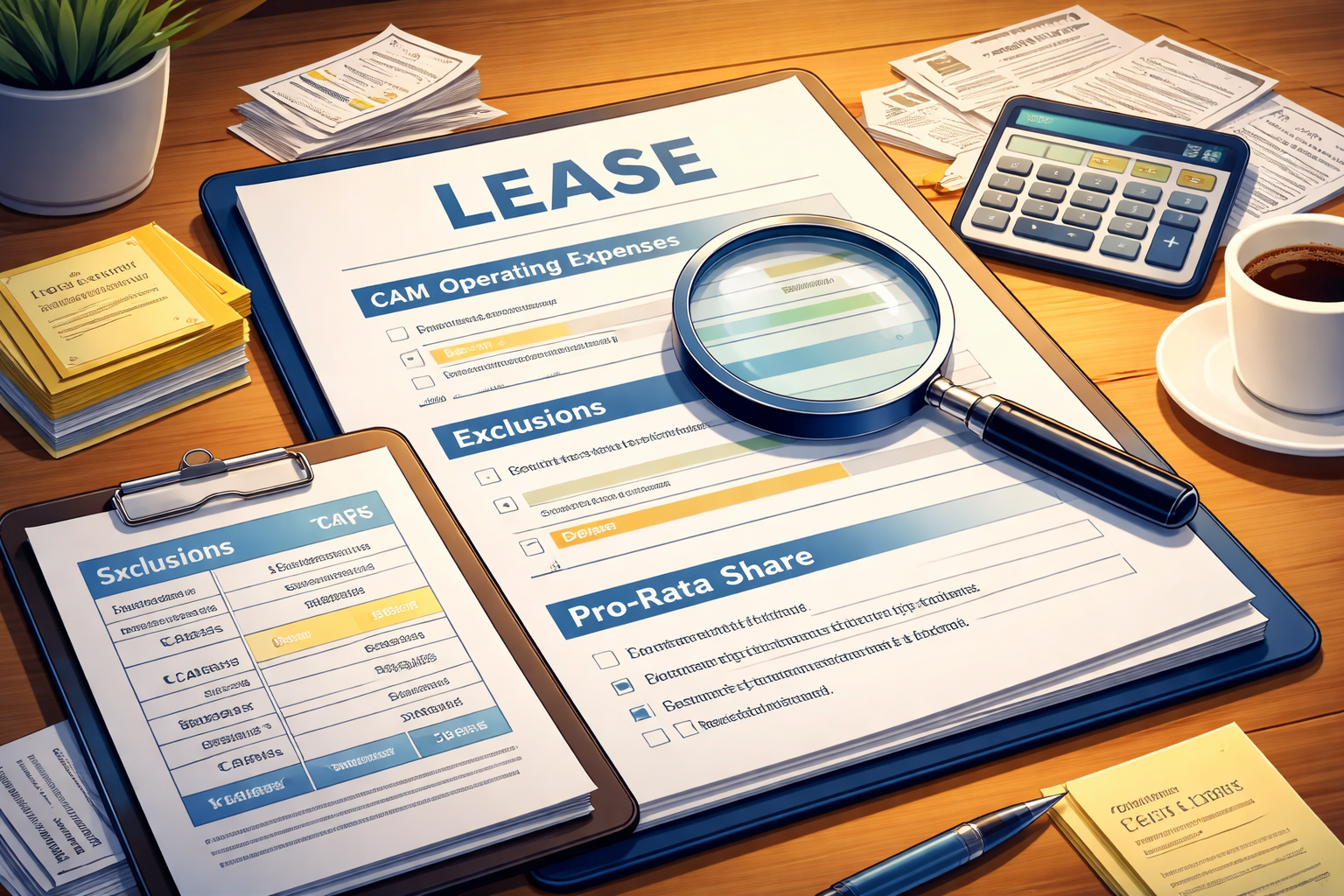
Before you look at numbers, find these in the lease:
- What counts as CAM / Operating Expenses (definition matters)
- What’s excluded (capital items, leasing costs, marketing, etc.)
- Any caps (like a 3% CAM cap)
- Gross-up rules (how occupancy affects shared costs)
- Your pro-rata share method (RSF? USF? GLA? other)
- Any audit rights and deadlines to dispute charges
If the lease doesn’t allow it, it doesn’t matter how common the charge is.
2) Confirm the big picture numbers
- Total annual CAM/NNN billed (estimated)
- Total actual CAM/NNN
- Resulting true-up amount (bill or credit)
Then check: does it roughly pass the smell test compared to last year?
3) Verify your pro-rata share and the building math
This is where a lot of mistakes live:
- Is your suite square footage correct?
- Is the total building rentable area correct?
- Is the pro-rata percentage calculated correctly?
- If there’s a multi-building campus: are you being allocated correctly?
One wrong denominator = wrong bill.
4) Look for “non-recoverables” hiding in CAM
Common flashpoints:
- Capital improvements billed as CAM (should usually be amortized, if allowed at all)
- Leasing commissions or tenant improvement costs
- Marketing / promotions
- Depreciation
- Owner overhead beyond what the lease allows
- Legal fees (unless specifically allowed)
- Fines / penalties
- Vacant space costs that shouldn’t be passed through
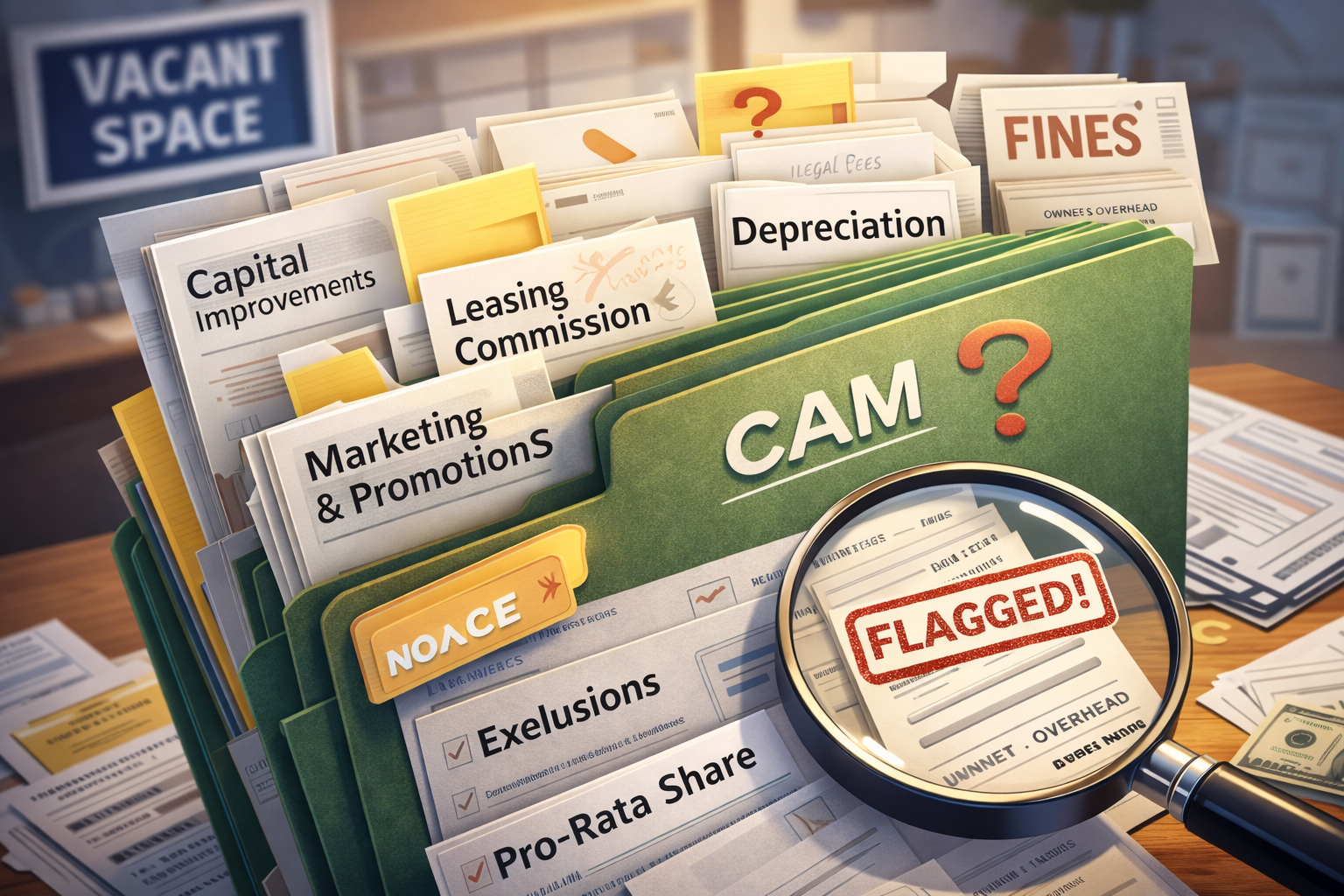
Some of these might be allowed in your lease—but many aren’t. The lease is the rulebook.
5) Check for admin/management fees and confirm the method
If there’s a management fee:
- Is it allowed in the lease?
- Is it a % of expenses or a flat fee?
- Is it calculated on the correct base?
- Is there a cap?
Admin fees aren’t automatically “wrong.” They’re wrong when they don’t match the lease.
6) Verify gross-up (especially if the building wasn’t full)
If occupancy was low, many leases allow “grossing up” certain variable expenses (like utilities/janitorial) to reflect what the building would cost at stabilized occupancy.
But gross-up is also easy to misuse. Confirm:
- What expenses are variable vs fixed
- What occupancy level is used for gross-up
- Whether the lease requires a minimum occupancy threshold
7) Match categories to reality (spot-check the weird stuff)

You don’t need every invoice. You do need clarity on outliers. Look for:
- Big year-over-year jumps
- New categories that weren’t there before
- One-time expenses that feel like projects (not maintenance)
- Snow removal, parking lot repairs, HVAC repairs—things that can swing wildly year to year
When something looks off, ask for backup on that category.
8) Confirm you’re getting credits where you should
If you have:
- a base year stop (common in modified gross)
- an expense cap
- negotiated exclusions
…make sure the reconciliation reflects them.
9) Check the timing + dispute window
Many leases require tenants to dispute within a certain window (example: 30–90 days). If you miss it, you may lose leverage even if the charge is questionable.
10) Don’t ignore the forward-looking part
Use the reconciliation to ask one smart question:
“What’s changing in the CAM budget this year, and why?”
That’s how you avoid surprise monthly increases.
Conclusion (and what’s next)
A clean CAM/NNN reconciliation review isn’t about picking a fight—it’s about making sure you’re paying what the lease actually requires, and catching mistakes before they become “accepted.”
In the next post, we’ll flip perspectives and share a January checklist for landlords/property managers: how to build a reconciliation package tenants trust, what documentation prevents disputes, and the fastest way to resolve questions without months of back-and-forth.

REQUEST YOUR CONSULTATION