December 8, 2025

Phase I Environmental Site Assessment Cost
If you’re buying or refinancing a commercial or industrial property in Texas, you’re going to hear one term early in due diligence: Phase I Environmental Site Assessment (often shortened to “Phase I ESA” or just “Phase I”).
For most lender-financed commercial deals, a Phase I ESA isn’t optional—it’s a standard requirement and a key step in protecting both your balance sheet and your future exit options.
But how much does a Phase I Environmental Site Assessment cost in Texas? And what should you budget for different types of properties?
This guide breaks down typical Phase I ESA costs, the factors that drive pricing up or down, and how CIP Texas helps you plan for environmental due diligence without derailing your timeline.
Quick Summary: What Does a Phase I ESA Cost?
Question: How much does a Phase I Environmental Site Assessment cost in Texas?
Short answer:
Most standard commercial Phase I ESAs today fall roughly in this range (based on recent industry data across the U.S.):
- Smaller, lower-risk commercial sites: ~$1,800 – $3,000
- Typical single-asset commercial/industrial deals: ~$2,000 – $5,000
- Large / complex / high-risk or multi-site portfolios: $5,000+
Actual pricing depends heavily on property type, size, history, and timeline. Environmental consulting firms and recent articles commonly cite average ranges between about $2,000 and $5,000+, sometimes up to ~$6,000 for complex sites.
In other words: budget a few thousand dollars per property—and more for complicated industrial histories—and then refine that with quotes once you know the site details.
1. What Is a Phase I Environmental Site Assessment?
A Phase I Environmental Site Assessment is a standardized, non-intrusive study of a property’s environmental history and current conditions. The goal is to identify Recognized Environmental Conditions (RECs)—red flags that suggest potential contamination or other environmental risks.
Under the current ASTM E1527-21 standard (recognized by the EPA as consistent with “All Appropriate Inquiries” under CERCLA), a Phase I ESA typically includes:
- Historical research – old aerials, fire insurance maps, city directories, topographic maps, and other historical sources for the site and neighboring properties.
- Regulatory database review – federal, state, and local environmental records in a search radius around the property.
- Site reconnaissance – a physical site visit by an environmental professional.
- Interviews – with current/past owners, operators, or others familiar with the site.
- Report & conclusions – a written report summarizing findings and stating whether RECs are present and whether further investigation (Phase II) is recommended.
No soil, groundwater, or vapor sampling happens at Phase I—that’s Phase II territory if the Phase I uncovers potential issues.

2. Why Do Lenders and Buyers Require Phase I ESAs in Texas?
There are two big reasons:
- Liability protection under CERCLA (Superfund).
Federal rules allow buyers to limit future environmental liability if they perform proper environmental due diligence—known as All Appropriate Inquiries (AAI)—before acquiring the property. ASTMs Phase I ESA standard is one accepted way to meet AAI.
- Risk management for lenders and investors.
Most banks and institutional lenders want a clean, current Phase I ESA on any collateralized commercial or industrial property. A strong report helps prevent surprises like underground tanks, dry-cleaner plumes, historic landfills, or floodplain issues from destroying value later.
In practice, that means if you’re buying Texas commercial real estate with financing, you should plan on ordering a Phase I ESA as part of your standard due diligence.
3. Typical Phase I Environmental Site Assessment Cost Ranges
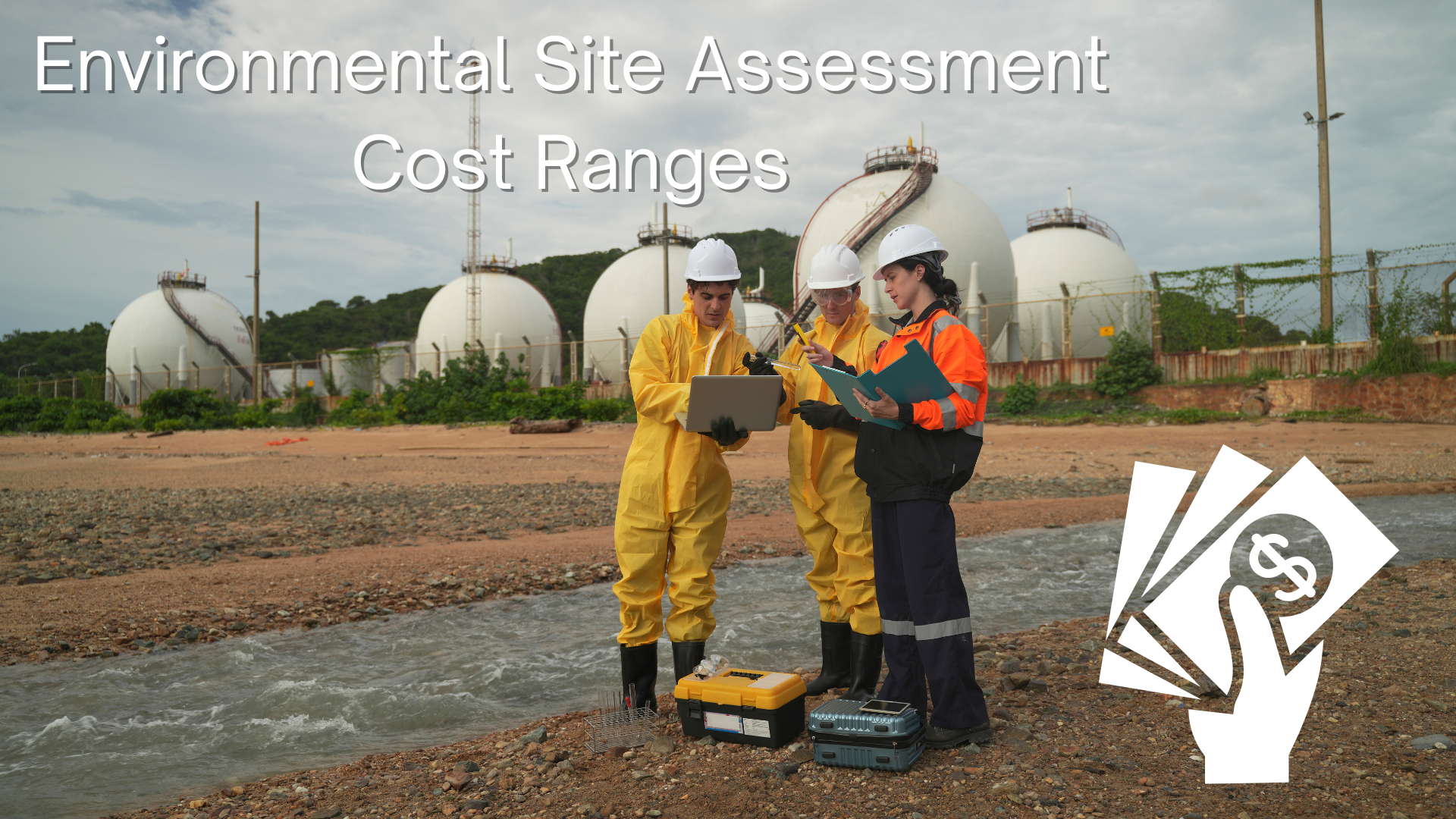
While no two sites are identical, recent industry guidance across multiple environmental firms lands Phase I ESA pricing in similar bands:
- Several 2024–2025 consulting sources describe “typical” Phase I ESA costs between about $2,000 and $5,000+, depending on property size, complexity, and risk.
- Some specifically cite roughly $1,800 – $3,500 for smaller commercial properties, with larger industrial sites moving toward or above the $3,500+ mark.
Putting that into a Texas-oriented rule of thumb:
- Small office / retail condo / simple flex bay:
Plan: ~$2,000 – $3,000 - Typical single-tenant or multi-tenant commercial building, or modest industrial facility:
Plan: ~$2,500 – $4,500 - Large industrial facilities, older sites with heavy industrial history, or multi-parcel tracts:
Plan: ~$4,000 – $6,000+
Again, these are ballpark ranges, not quotes—actual proposals will move up or down based on the factors below.
4. What Drives Phase I ESA Cost Up or Down?
Here are the main levers that affect Phase I Environmental Site Assessment cost in Texas:
4.1 Property Type & Risk Profile
Some uses are simply higher risk:
- Older gas stations and truck stops
- Properties with underground storage tanks
- Historic dry cleaners
- Heavy industrial or manufacturing sites
These typically require deeper historical research and more regulatory review, which adds time and cost. A newer single-tenant office in a platted business park is usually much more straightforward.
4.2 Size and Number of Parcels
A 2,000 SF office condo on a single platted lot is very different from 200 acres of industrial land with multiple tracts. More acreage, buildings, and parcels mean more historical sources to review, more adjoining properties to evaluate, and more site area to inspect—all of which increase cost.
4.3 Location & Data Availability
In major Texas metros (Austin, DFW, Houston, San Antonio), there’s a lot of historical and regulatory data—great for diligence, but it can take longer to review. In rural areas, thinner records can require extra legwork. Remote sites or those with difficult access can also add travel time to the bill.
4.4 Historical Complexity
If a property has decades of prior uses—multiple tenants, expansions, fueling, or heavy industry—the consultant has more records to track down and analyze. Under ASTM E1527-21, there’s also greater emphasis on using specific historical sources (aerials, fire insurance maps, directories, topo maps), which improves quality but can increase cost.
4.5 Timeline (Standard vs. Rush)
Most Phase I ESAs take about 2–4 weeks from notice-to-proceed to delivery. If you need the report in 10 business days or less, expect a rush premium so the consultant can prioritize your project and dedicate extra staff.
4.6 Scope Add-Ons
Buyers and lenders sometimes add services on top of the basic Phase I, such as:
- Limited asbestos or lead-based paint screening
- Radon screening
- Wetland or floodplain evaluations
- Limited regulatory compliance reviews
These are outside the core ASTM Phase I scope and will increase total cost, especially for older industrial or institutional properties.
5. When Should You Order a Phase I ESA in a Texas Deal?

Timing matters, both for deal risk and for regulatory validity.
Under ASTM E1527-21 and EPA’s All Appropriate Inquiries rules:
- Key components of the ESA—interviews, records review, site visit, and environmental professional’s declaration—must be completed within 180 days before closing to fully qualify for liability protections.
In practical Texas deal terms:
- Too early: If you order a Phase I very early and the closing drifts past six months, you may need an update or a new report.
- Too late: If you wait until the end of your feasibility/option period, you risk a bad surprise with no time to respond (renegotiate, extend, or walk).
Most sophisticated buyers in Texas try to:
- Order the Phase I soon after PSA execution, early in the feasibility/inspection period.
- Coordinate the ESA timeline with loan approval milestones so lenders have what they need.
CIP’s brokers regularly help clients map out that due diligence calendar so environmental, survey, appraisal, and zoning work all stay aligned.
6. Who Typically Pays for the Phase I ESA?
From a market-norm perspective:
- Buyer / borrower – In most Texas commercial transactions, the buyer (or tenant on a ground lease) pays for Phase I as part of their due diligence budget.
- Seller-ordered Phase I – Occasionally, sellers commission a Phase I up front to de-risk marketing, but many lenders still prefer a buyer-specific report.
Ultimately, payment is negotiable in the PSA or lease, but you should assume you’ll be covering it unless your deal structure says otherwise.
7. Why the Cheapest Phase I Can Be the Most Expensive Mistake
In a competitive environment, you’ll see “discount Phase I” offers—sometimes under $2,000—even on larger or more complex sites. That can be tempting, especially on tight underwriting. But industry commentary is consistent: extremely cheap and fast Phase I reports often cut corners.
Common risks with low-ball Phase I pricing:
- Data gaps – Missing historical sources, incomplete regulatory reviews, or skipped interviews.
- Non-compliance with ASTM / AAI – Which can jeopardize liability protections and lender comfort.
- Overly conservative conclusions – A thin report may flag more RECs simply because the consultant doesn’t have enough data, pushing you toward a Phase II (much more expensive) to resolve uncertainty.
In other words, paying a little more for a thorough, lender-ready Phase I is usually cheaper than paying for a rushed, incomplete report that triggers unnecessary follow-up work—or fails to catch a real problem.
8. How to Budget Phase I ESA Costs into Your Texas Due Diligence

For buyers, developers, and investors in Texas, here’s a pragmatic budgeting approach:
Start with a baseline per property.
- Simple commercial: budget ~$2,500–$3,500.
- Larger or industrial: budget ~$3,500–$5,000+
Adjust for risk profile.
- Gas stations, terminals, old industrial uses, or sites with known environmental issues → assume the upper end or above.
Account for timelines.
- If your feasibility period is short or your lender needs a fast turnaround, add room for rush fees.
Layer into your broader Texas due diligence budget.
- Alongside survey, appraisal, zoning/entitlements, third-party inspections, and legal review.
- Make sure Phase I timing lines up with the feasibility deadline and loan commitment dates.
9. How CIP Texas Helps You Navigate Environmental Due Diligence
CIP Texas is not an environmental consulting firm—we don’t write Phase I ESA reports ourselves. But we work with them constantly as part of Texas commercial and industrial transactions.
On the broker and advisory side, we help clients:
- Scope the need.
Identify which properties clearly warrant a Phase I (most financed acquisitions) and where additional studies might be wise based on history and use. - Coordinate with environmental professionals.
Make introductions to reputable Phase I providers active in Central Texas and across the state. - Interpret the findings in business terms.
Translate Phase I conclusions—especially RECs and recommended Phase II work—into deal decisions: renegotiate, remediate, re-entitle, or walk. - Keep the deal on schedule.
Integrate Phase I timing with your contract milestones so you don’t run out of feasibility period before you have clear answers.
Thinking About a Texas Acquisition and Wondering What Your Phase I ESA Will Cost?
Whether you’re buying your first industrial building, assembling land for development, or refinancing a portfolio, CIP Texas can help you map out the full due diligence picture—including environmental, zoning, infrastructure, and market risk—before you commit.
- Call us at 512-682-1000
We’ll help you understand the likely Phase I Environmental Site Assessment cost, connect you with qualified professionals, and keep your Texas deal moving forward with confidence.

REQUEST YOUR CONSULTATION