June 8, 2026
Speeding Up Central Texas Permitting
For commercial real estate investors and developers, time is money 💵
Every month spent waiting for permits, site plan approvals, or entitlement decisions adds carrying costs, delays construction and pushes revenue further into the future.
While Austin remains one of the most desirable markets in the country, many developers are discovering that some of the best opportunities in Central Texas exist just outside the city limits.
Understanding how different municipalities handle permitting and development approvals can significantly impact project timelines, costs, and overall investment returns.
Why Permitting Matters More Than Ever
When evaluating land or development opportunities, investors often focus on:
- Location
- Population growth
- Traffic counts
- Utility availability
- Market demand
Those factors are important, but the entitlement process can ultimately determine whether a project moves forward efficiently or gets stuck in administrative review for months.
Even a strong project can become financially challenging when approval timelines stretch beyond expectations.
Holding costs continue to accumulate while:
- Interest expenses increase
- Construction schedules get delayed
- Leasing opportunities are postponed
- Market conditions change
The faster a project reaches construction, the faster it can begin generating value.
Austin's Permitting Process Is Improving

Austin has received significant attention in recent years for lengthy permitting and development review timelines.
City leaders have acknowledged the issue and have implemented reforms designed to reduce review times and eliminate unnecessary steps. Reports indicate that site plan review turnaround times have improved substantially compared to previous years, and the city continues working to streamline development approvals. The city has also introduced expedited review options and reduced review requirements for certain project types.
These improvements are encouraging.
However, Austin remains a complex urban environment with multiple layers of review, infrastructure requirements, environmental considerations, and extensive development regulations. Some commercial projects can still experience review periods measured in months rather than weeks.
For many investors, that reality has increased interest in nearby growth markets.
Why Developers Are Looking Beyond Austin
Central Texas growth is no longer limited to Austin itself.
Surrounding counties have become major destinations for residential, industrial, logistics, manufacturing, and commercial development.
Areas such as:
continue attracting businesses and residents seeking more affordable land, easier development pathways, and room for expansion.
Many of these locations benefit from their proximity to Austin while offering fewer regulatory hurdles.
Williamson County: A Development Hotspot
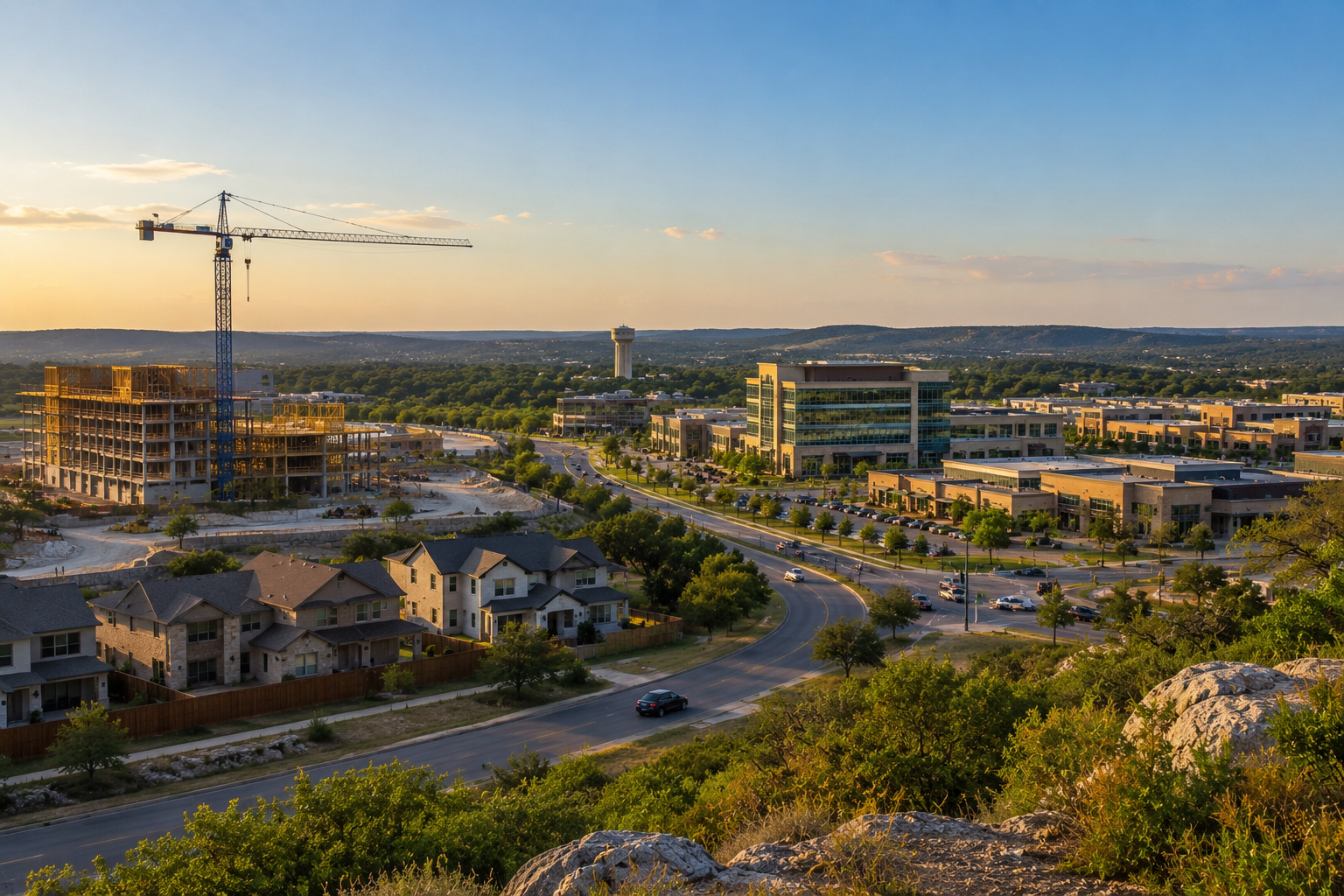
Williamson County has become one of the fastest-growing areas in Texas.
Communities such as Round Rock, Georgetown, Taylor, Liberty Hill, and Leander continue attracting major employers, industrial users, and residential growth.
One factor that appeals to developers is the county's relatively straightforward development environment. In unincorporated portions of Williamson County, there are no county zoning regulations, which can simplify certain development considerations compared to more heavily regulated urban jurisdictions.
The county continues issuing large numbers of development permits as population growth accelerates.
That combination of growth and predictability has made Williamson County a preferred target for many investors.
Bastrop County: Rising Opportunity East of Austin
Bastrop County has quietly become one of the most watched development markets in Central Texas.
Located east of Austin, the area continues benefiting from major infrastructure investment, manufacturing expansion, and technology-related growth.
Several large-scale projects, including new data center developments, have brought increased attention to the county and its long-term growth potential.
Many developers appreciate the county's willingness to embrace digital permitting systems and modernized application processes that help streamline communication and document review.
As Austin land prices continue climbing, Bastrop County remains attractive for investors seeking larger development opportunities with fewer barriers to entry.
Practical Ways to Speed Up Your Approval Process

Regardless of where you plan to develop, several strategies can help reduce delays.
Start Municipal Conversations Early
Meeting with planning staff before submitting formal applications often helps identify issues before they become costly delays.
Early discussions can reveal:
- Utility concerns
- Road requirements
- Environmental constraints
- Drainage requirements
- Site-specific challenges
Submit Complete Documentation
One of the most common causes of delays is incomplete applications.
Missing reports, surveys, engineering documents, or supporting materials often trigger additional review cycles.
A complete package usually moves through the system faster than multiple revisions.
Understand Jurisdiction Boundaries
A property may fall within:
- City limits
- An extraterritorial jurisdiction (ETJ)
- County jurisdiction
- Special utility districts
Each can have different approval requirements.
Understanding these distinctions early can prevent surprises later in the process.
Build Time Into Your Underwriting
Even in faster jurisdictions, permitting rarely happens overnight.
Conservative underwriting assumptions help investors avoid unrealistic expectations and protect project returns if timelines extend.
The Bottom Line
Austin remains one of the strongest commercial real estate markets in the country, and recent reforms are helping improve development timelines. However, many developers are increasingly finding opportunities in surrounding Central Texas counties where permitting processes may be more predictable and development pathways can be less complicated.
For investors evaluating land opportunities in Central Texas, understanding entitlement timelines can be just as important as understanding demographics, traffic counts, or utility availability.
The right property in the right jurisdiction can save months of development time—and those months can have a significant impact on overall project profitability.
Whether you're considering Austin, Williamson County, Bastrop County, or another growing Central Texas market, conducting permitting and entitlement due diligence early in the process can help keep projects moving forward and avoid costly delays down the road.
At CIP Real Estate, we work with investors, developers, and business owners throughout Central Texas to identify opportunities that align with their goals while helping them better understand the local development landscape. If you're evaluating a property, exploring expansion opportunities, or simply looking for guidance on navigating the entitlement and permitting process, our team is here to help. Contact CIP TX to discuss your project and learn more about opportunities across the Central Texas market.
REQUEST YOUR CONSULTATION