August 28, 2026
Retail Pad Sites in Fast-Growth Texas Markets
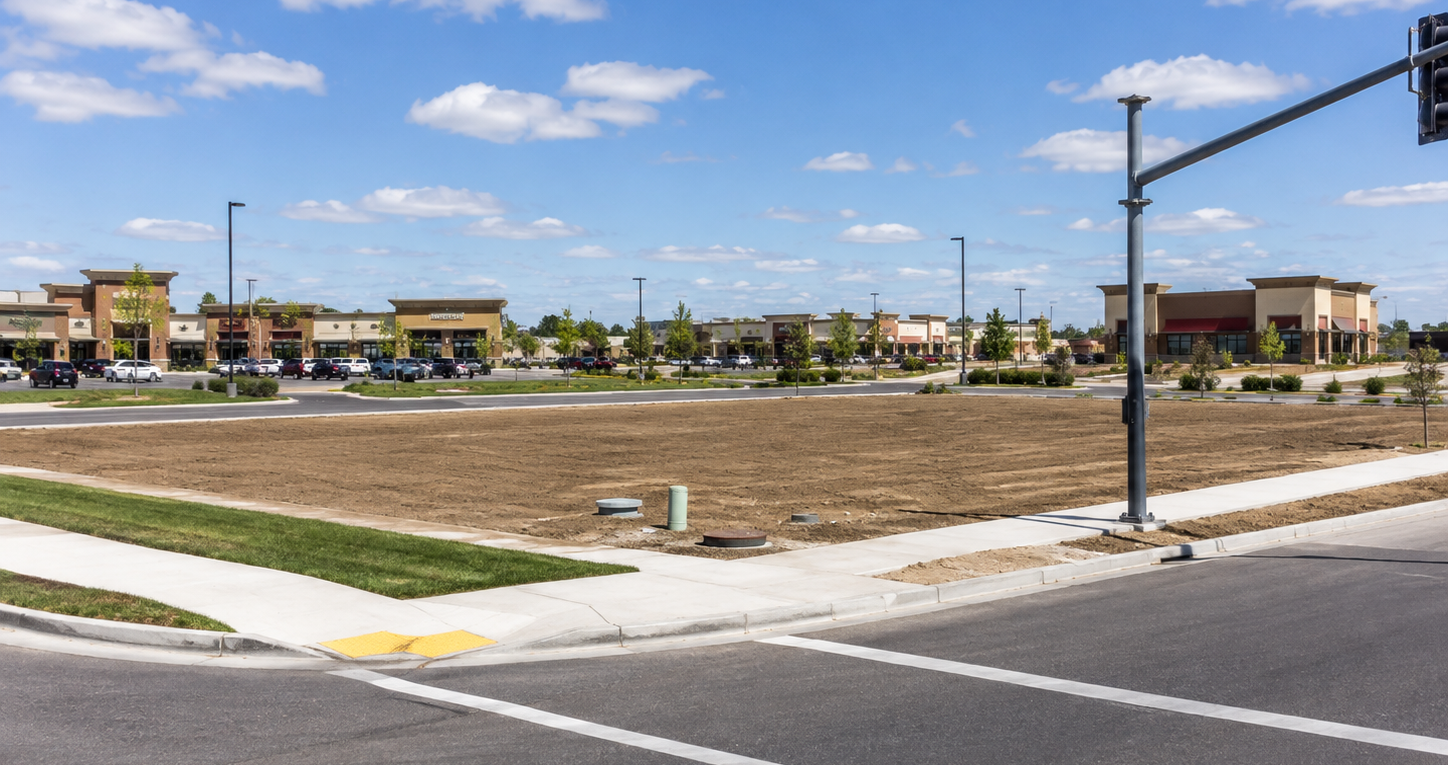
Retail pad sites continue to attract attention across fast-growth Texas markets, especially in areas where population growth, traffic patterns, new housing, and commercial development are creating demand for more convenient services.
For investors, developers, and owner-users evaluating Texas retail pad sites, the opportunity can be strong. A well-positioned pad site near rooftops, major roads, grocery anchors, schools, medical users, or mixed-use developments can appeal to a wide range of tenants.
But not every site with frontage is a good retail site.
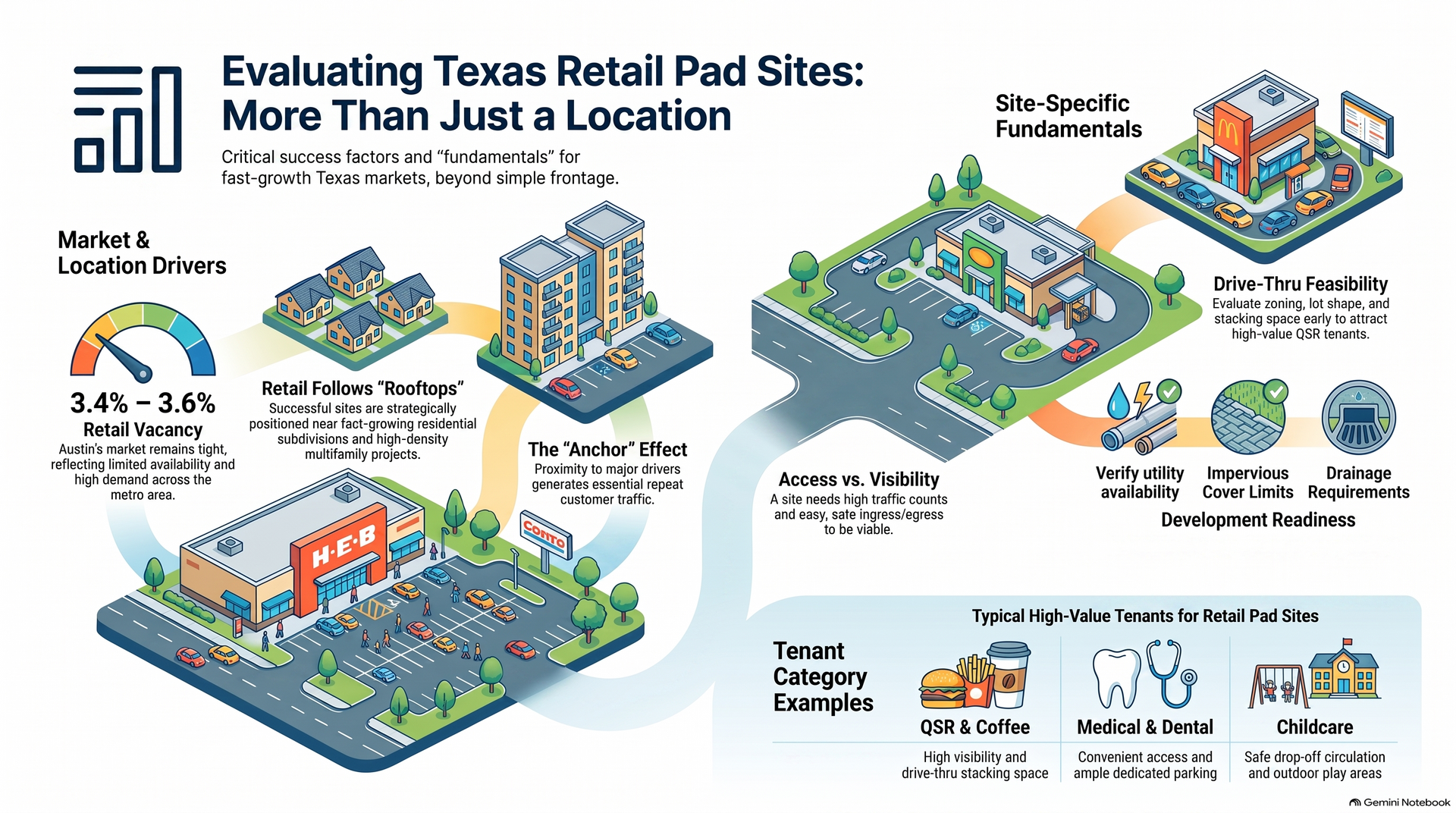
The success of a retail pad depends on visibility, access, traffic counts, utility availability, zoning, drive-thru potential, parking, nearby demand, and the type of tenants the location can realistically support.
In Central Texas, these details matter even more. Austin’s retail market has remained tight, with Partners reporting a 3.6% retail vacancy rate in Q1 2026, despite slower leasing activity. Matthews also reported Austin retail vacancy at 3.4% in Q2 2026, reflecting continued limited availability across the metro.
For buyers looking at commercial land for retail development, the question is not just whether the site is in a growing area. The real question is whether the site has the right fundamentals to support long-term tenant demand.
What Is a Retail Pad Site?
A retail pad site is a smaller commercial development site that is typically positioned along a major road, at the edge of a shopping center, near an anchor tenant, or within a larger mixed-use or commercial development.
Pad sites are often used for:
- Quick-service restaurants
- Coffee shops
- Banks
- Medical clinics
- Dental offices
- Urgent care
- Childcare centers
- Car washes
- Auto service users
- Convenience stores
- Small-format retail
- Service-based tenants
Some pad sites are sold to owner-users. Others are developed and leased to tenants. Many investors are attracted to pad sites because they can support single-tenant or small multi-tenant retail projects with strong visibility and convenient access.
Why Retail Pad Sites Are Attractive in Central Texas
Fast-growth Texas markets continue to create demand for everyday retail and service businesses. As new homes are built and population expands, residents need convenient places for food, childcare, healthcare, coffee, banking, auto services, fitness, and personal services.
That makes Central Texas retail real estate attractive in high-growth corridors where residential development is leading commercial demand.
Retail pad sites can be especially appealing because they may offer:
- Strong visibility
- Smaller and more manageable development scale
- Demand from national, regional, and local tenants
- Potential for drive-thru users
- Proximity to anchors
- Long-term ground lease or net lease potential
- Flexibility for multiple retail or service uses
However, pad sites can also be highly sensitive to design, access, traffic movement, and tenant requirements. A site that works well for one user may not work for another.
Visibility and Traffic Counts
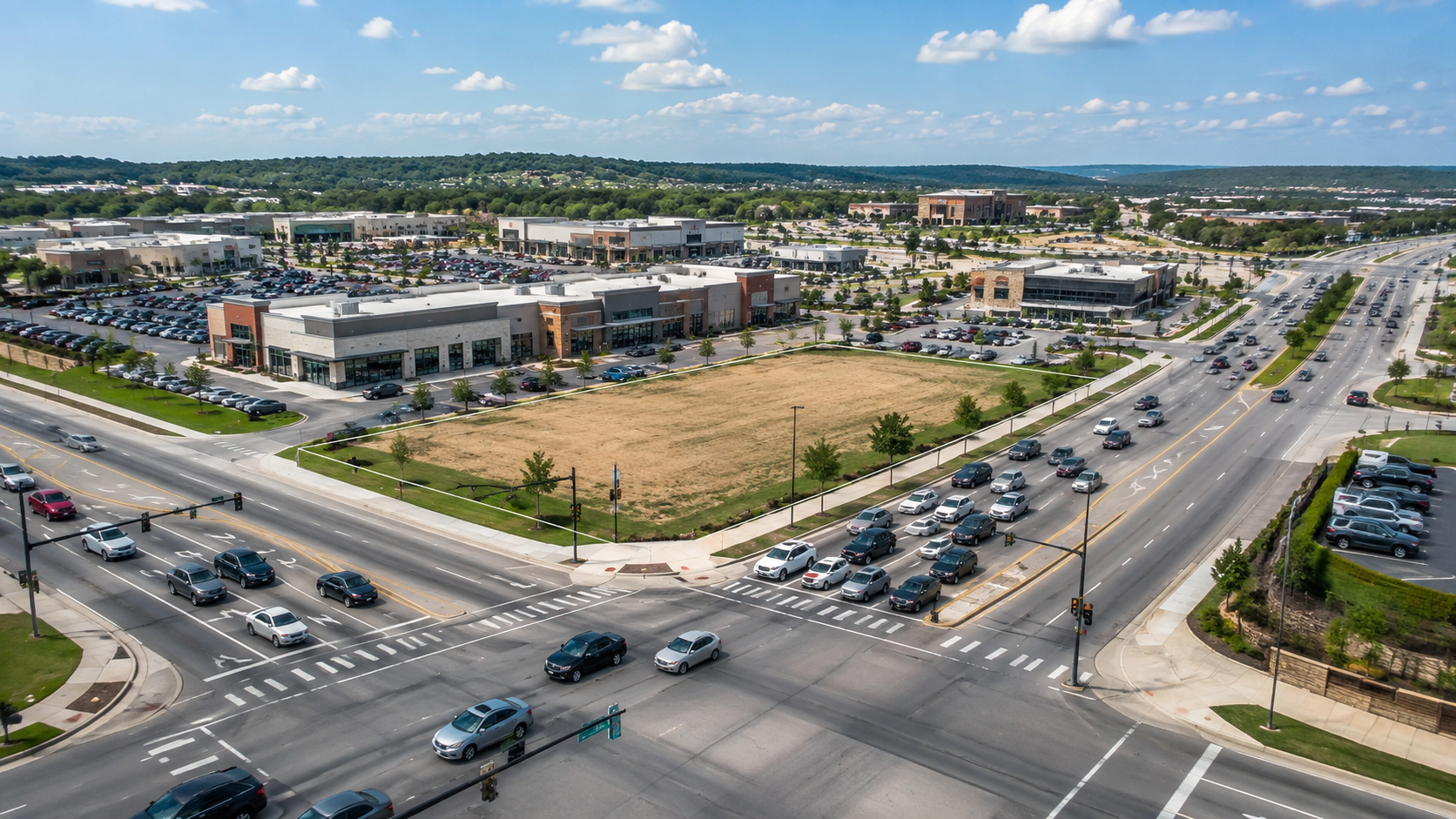
Visibility is one of the most important factors in retail site selection.
Retail users want to be seen by drivers, residents, commuters, and customers already traveling through the area. A pad site with strong road exposure, clear signage opportunities, and high daily traffic counts may have a major advantage over a site that is hidden, difficult to see, or poorly positioned.
Investors evaluating Austin retail sites or retail land in surrounding Central Texas markets should review:
- Daily traffic counts
- Road classification
- Speed limits
- Sight lines
- Signage visibility
- Intersection exposure
- Corner positioning
- Nearby traffic generators
- Directional traffic patterns
- Future road expansions
High traffic counts are helpful, but they are not enough on their own. A site also needs safe and convenient access. Drivers may see the property, but if they cannot easily enter, exit, or turn into the site, tenant demand may be limited.
Access and Drive-Thru Potential
Access can make or break a retail pad site.
For many retail users, especially quick-service restaurants, coffee shops, banks, pharmacies, and some medical users, access is just as important as visibility. A site with good frontage but difficult ingress and egress may not support the tenant mix an investor is targeting.
Buyers should evaluate:
- Existing curb cuts
- Right-in/right-out limitations
- Median breaks
- Left-turn access
- Traffic signal proximity
- Shared access easements
- Cross-access with neighboring properties
- Internal circulation
- Stacking space
- Parking layout
- Pedestrian access
- Delivery access
Drive-thru potential is especially important for many modern retail tenants. A pad site that can accommodate safe drive-thru stacking, circulation, and pickup patterns may attract more interest from coffee, QSR, banking, and pharmacy users.
However, drive-thru feasibility depends on more than lot size. Zoning, site shape, setbacks, parking, traffic flow, local approvals, and neighboring uses can all affect whether a drive-thru is realistic.
For pad site development in Texas, access and circulation should be reviewed early, before assuming a site can support a specific tenant.
Nearby Rooftops and Population Growth
Retail follows rooftops.
A pad site near fast-growing residential areas can benefit from built-in customer demand. This is especially important in Central Texas communities where new subdivisions, multifamily projects, master-planned communities, and mixed-use developments are expanding the customer base.
Investors should review:
- Existing population
- Projected population growth
- New housing starts
- Multifamily development
- Household income
- Daytime population
- School locations
- Employment centers
- Commuter patterns
- Nearby commercial development
A strong retail pad site usually serves a clear trade area. The more a site is surrounded by rooftops, schools, jobs, and daily traffic, the more attractive it may be to retailers and service tenants.
This is why growing areas around Austin, Georgetown, Leander, Cedar Park, Round Rock, Kyle, Buda, San Marcos, Bastrop, and other Central Texas markets continue to draw attention from retail users and investors.
Grocery Anchors and Retail Traffic Drivers
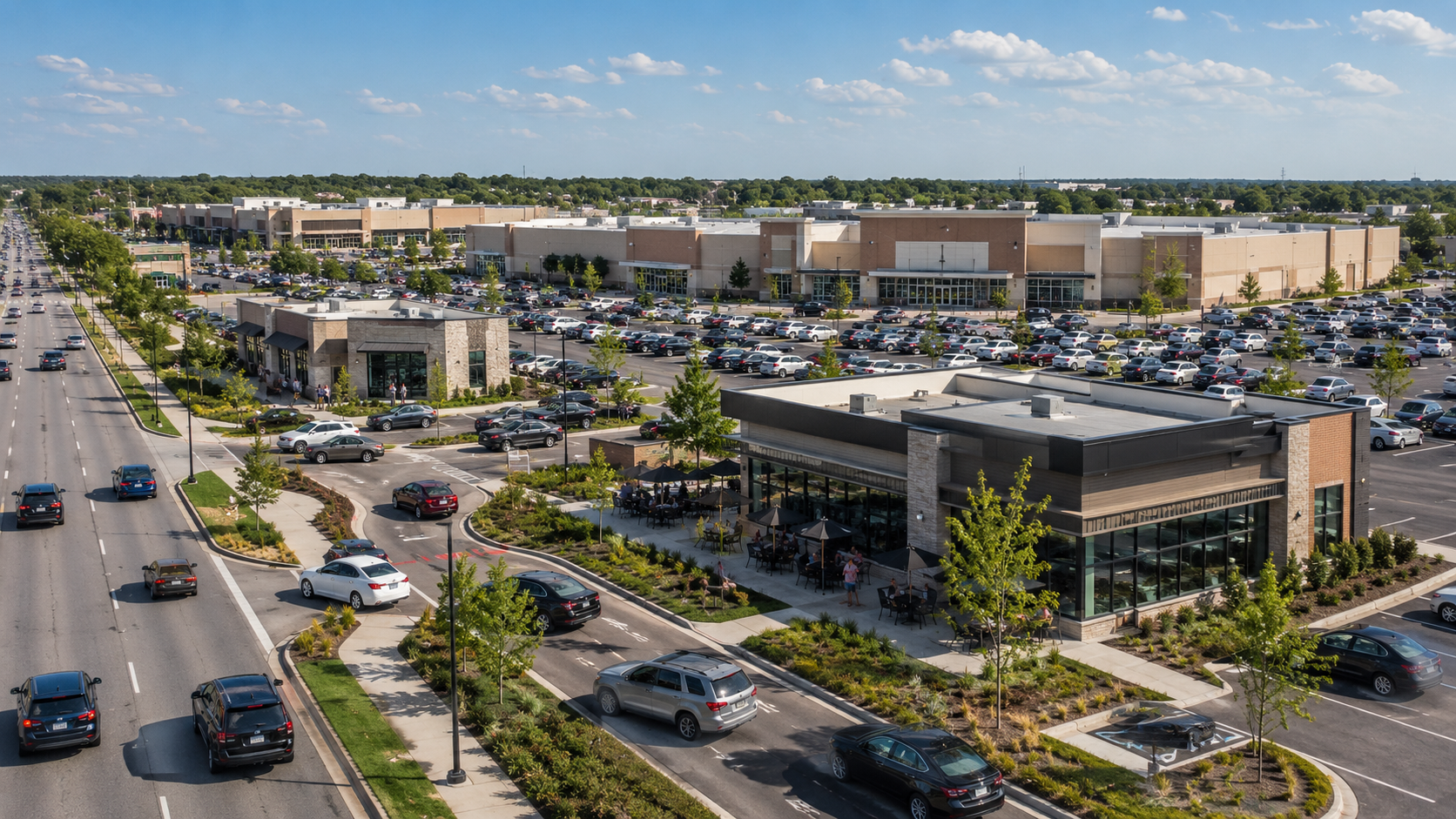
Grocery anchors are one of the strongest traffic drivers in retail real estate.
Pad sites near grocery stores often benefit from repeat customer visits, strong daily traffic, and the convenience of being part of an established shopping pattern. Tenants like restaurants, coffee shops, medical clinics, dental offices, fitness users, pet services, and personal services often want to be near grocery-anchored centers.
In Texas, pad sites near major anchors such as H-E-B, Costco, Walmart, Target, and similar traffic-generating retailers can attract significant interest.
Investors should consider:
- Is the pad site near a grocery anchor?
- Is the anchor already open or still planned?
- How strong is the anchor’s draw?
- Does the site benefit from shared traffic?
- Are there cross-access or parking agreements?
- Are there restrictions on tenant uses?
- Does the surrounding tenant mix support repeat visits?
A pad site near a strong anchor can be more valuable than a similar site without a built-in traffic driver.
Medical, QSR, Childcare, Coffee, and Service Tenants
Retail pad sites are not only for traditional retailers.
Many of the strongest users for pad sites are service-based businesses that benefit from convenience, visibility, and repeat customer demand.
Common pad site tenants include:
- Quick-service restaurants
- Coffee shops
- Urgent care clinics
- Dental offices
- Medical clinics
- Veterinary clinics
- Childcare centers
- Banks and credit unions
- Car washes
- Auto service users
- Fitness concepts
- Personal service businesses
These tenants often want locations that are easy to find, easy to access, and close to residential growth.
For investors, the key is understanding which users actually fit the site. A childcare center may need outdoor play area and safe drop-off circulation. A coffee shop may need drive-thru stacking. A medical user may prioritize parking and easy access. A QSR may care heavily about traffic counts and signage.
The best commercial land for retail development is not just land in a busy area. It is land that can support the operational needs of the likely tenant.
Why Pads Near H-E-B, Costco, Buc-ee’s, and Mixed-Use Projects Get Attention
In Texas, certain anchors and destinations can create strong momentum around nearby pad sites.
Sites near H-E-B, Costco, Buc-ee’s, and major mixed-use projects often attract attention because these locations can generate consistent traffic, regional draw, and long-term customer demand.
For example, a pad site near an H-E-B may benefit from daily grocery trips and surrounding neighborhood growth. A site near Costco may attract regional shoppers and strong weekend traffic. A site near Buc-ee’s may benefit from highway visibility, fuel traffic, travelers, and nearby commercial activity. A site near a major mixed-use project may benefit from residents, office users, hotel guests, entertainment visitors, and walkable activity.
Investors should still be careful. Being near a major anchor does not automatically make a pad site successful. Buyers should evaluate access, visibility, site layout, use restrictions, utility capacity, and tenant demand.
But when the fundamentals line up, proximity to a major anchor can significantly improve a pad site’s appeal.
Zoning, Utilities, and Development Feasibility
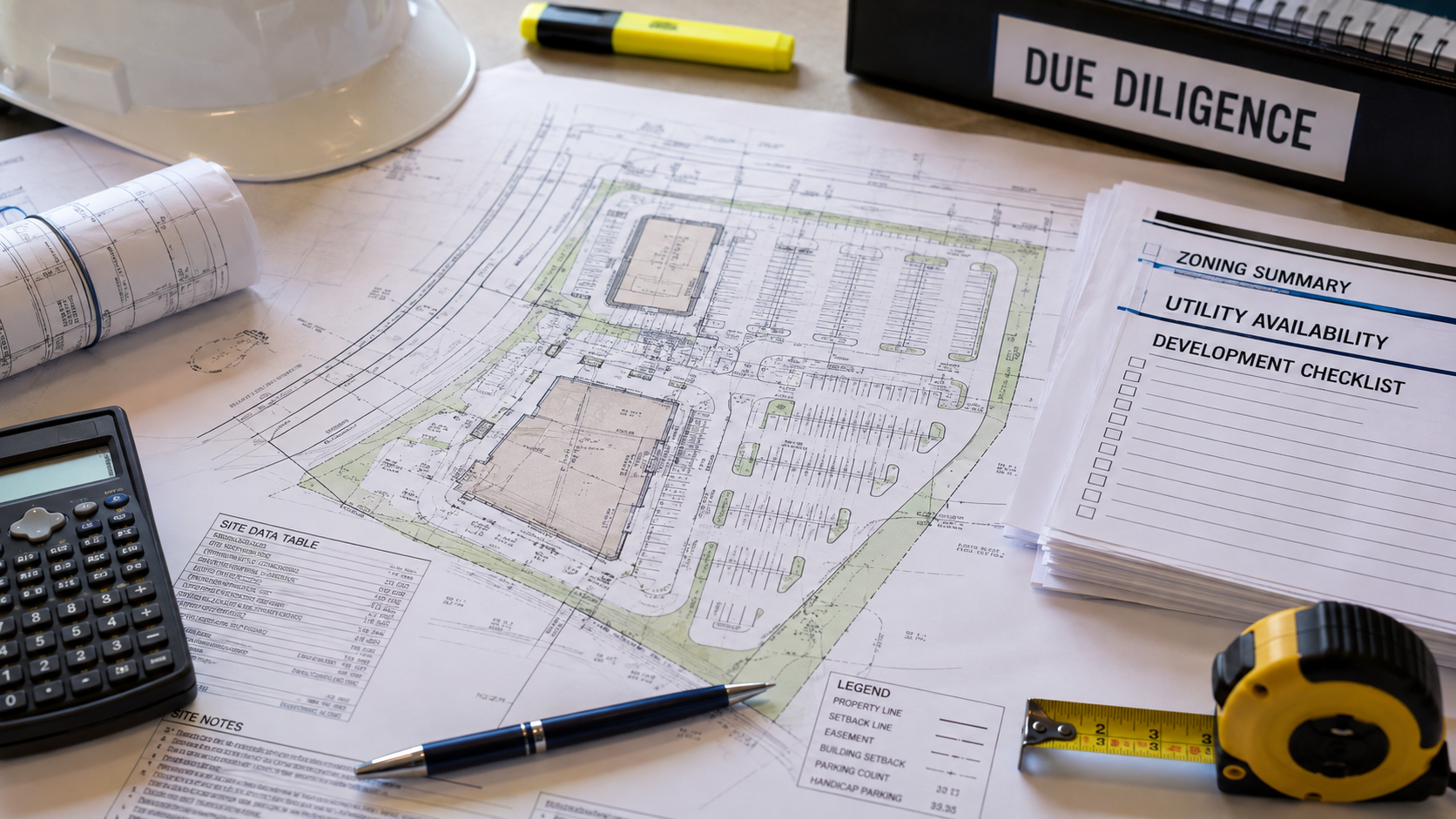
A retail pad site may have strong demand, but the deal still needs to work from a development standpoint.
Before purchasing a retail pad site in Texas, buyers should review:
- Zoning and allowed uses
- Drive-thru restrictions
- Parking requirements
- Signage rules
- Setbacks
- Impervious cover limits
- Utility availability
- Drainage and detention requirements
- Access approvals
- Easements
- Shared parking or cross-access agreements
- Platting or site plan requirements
- Permitting timeline
This is especially important for raw land or sites within larger planned developments. A property may be marketed as a retail pad, but that does not mean every retail use is permitted or practical.
For pad site development in Texas, early due diligence can help identify whether the site is truly development-ready.
What Investors Should Watch Before Buying a Retail Pad Site
Before buying a retail pad site, investors should ask:
- Is the site visible from a major road?
- Are traffic counts strong enough for the target tenant?
- Is access easy and safe?
- Can the site support a drive-thru?
- Are there enough nearby rooftops?
- Is the area growing?
- Are there strong anchors nearby?
- What tenants are realistic for this location?
- Are utilities available?
- Are there restrictions on use?
- What approvals will be required?
- How long will development take?
- What exit strategy makes sense?
The best retail pad sites usually combine location, visibility, access, infrastructure, and tenant demand.
The Bottom Line
Retail pad sites can be attractive investments in fast-growth Texas markets, especially in areas with strong residential growth, major traffic corridors, grocery anchors, and demand from service-based tenants.
But investors should not evaluate a pad site on location alone.
Visibility, traffic counts, access, drive-thru potential, nearby rooftops, utility availability, zoning, anchors, and tenant fit all play an important role in whether a site can support successful retail development.
CIP helps clients evaluate retail pad sites, commercial land, and development opportunities throughout Central Texas. Whether you are considering a site near a major anchor, a growing residential area, or a future mixed-use project, understanding the fundamentals early can help you make a more informed investment decision.
REQUEST YOUR CONSULTATION