September 24, 2026
Commercial Site Development in Texas: A Practical Checklist for Buyers
Not every commercial property that looks good on paper is actually ready to develop.
A site may have the right location, strong traffic counts, nearby growth, and a competitive asking price. But before a buyer, developer, or investor moves forward, they need to answer one important question:
Is this site truly development-ready?
In commercial land development in Texas, a development-ready site is one that has been reviewed for the major issues that can affect whether a project can move forward, how long it may take, and what it may cost. That includes zoning, utilities, access, drainage, floodplain, title, survey, entitlements, off-site improvements, and permitting timeline.
For buyers evaluating Central Texas land development opportunities, this review can be the difference between a strong project and a site that becomes more complicated, expensive, or delayed than expected.
What Does Development-Ready Mean in Commercial Real Estate?
A development-ready commercial site is a property that has been evaluated for the legal, physical, utility, infrastructure, and approval requirements needed to support a proposed project.
That does not always mean the site is fully entitled, permitted, engineered, or shovel-ready. In many cases, “development-ready” simply means the buyer has a clear understanding of what must happen before construction can begin.
A development-ready site should answer key questions such as:
- Is the intended use allowed?
- Is the property inside city limits, a county area, or an ETJ?
- Are utilities available and adequate?
- Does the site have legal and practical access?
- Are there easements, title exceptions, or survey issues?
- Is any portion of the site in a floodplain?
- Will drainage or detention requirements reduce usable acreage?
- Are off-site improvements required?
- What approvals, permits, or entitlements are still needed?
- How long could the development timeline take?
For anyone asking how to evaluate commercial land, these are some of the most important starting points.
Why Development Readiness Matters in Texas
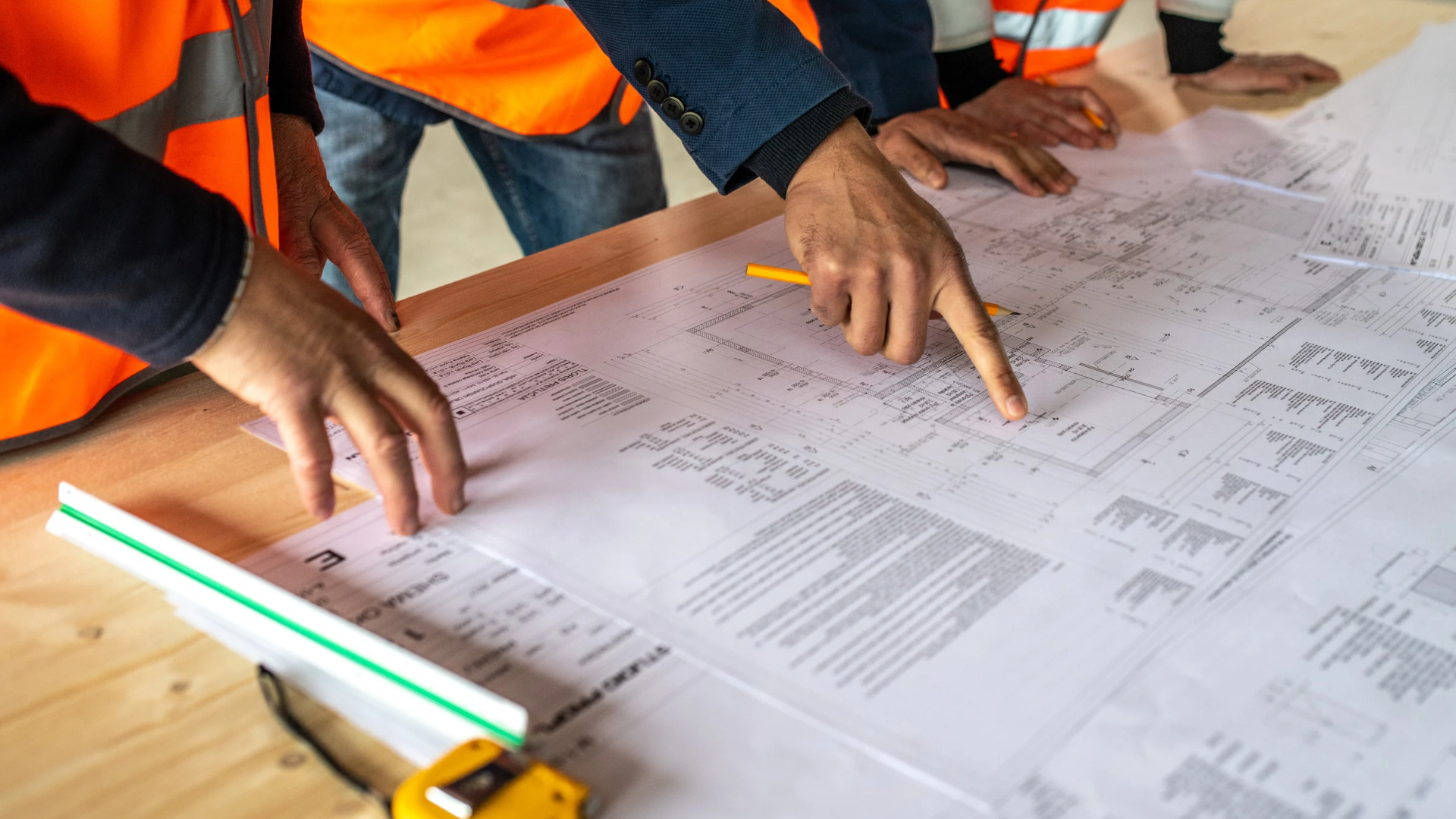
Texas continues to attract commercial development, industrial users, retailers, medical users, multifamily projects, data centers, and investors looking for growth. But a strong market does not remove site-level risk.
In fact, fast-growth markets can make due diligence even more important.
A property may be located in a high-demand corridor but still have challenges related to utilities, access, drainage, zoning, permitting, or jurisdictional approvals. Texas development can also involve multiple local entities, including cities, counties, utility providers, TxDOT, appraisal districts, municipal utility districts, and other special districts.
For example, Texas appraisal districts determine property value, but local taxing units set tax rates, which means buyers also need to understand how local entities affect long-term ownership costs.
Development readiness helps buyers understand the full picture before they close, commit capital, or build a project timeline around assumptions that may not hold up.
Commercial Land Due Diligence Starts With the Intended Use
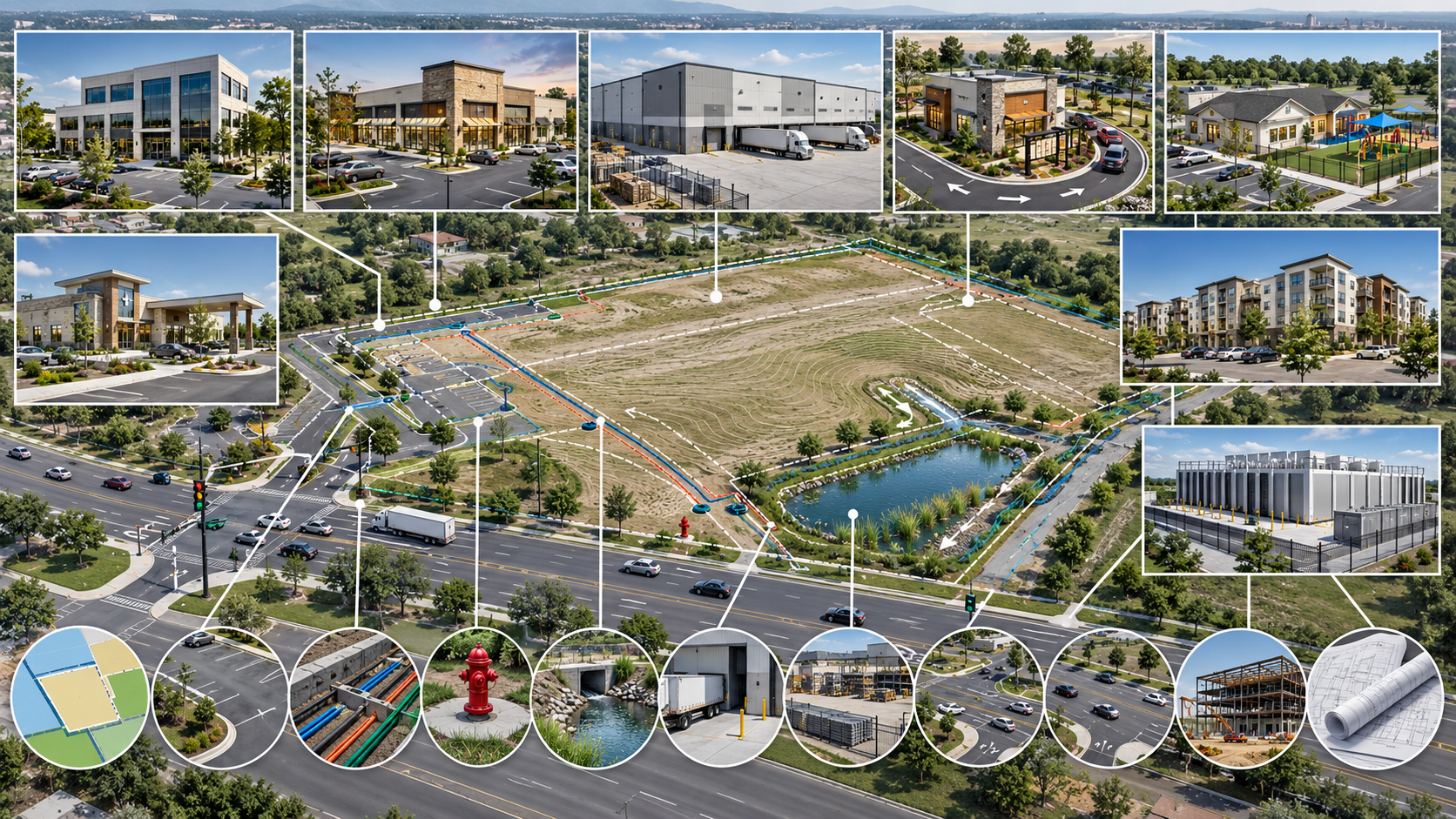
Before evaluating whether a site is development-ready, the buyer needs to define the intended use.
A site that works for one project may not work for another. A small office building, retail pad, industrial warehouse, restaurant, childcare center, contractor yard, medical clinic, multifamily project, or data center may each have different requirements.
The intended use can affect:
- Zoning
- Parking
- Utilities
- Fire flow
- Access
- Drive-thru circulation
- Loading
- Outdoor storage
- Drainage
- Building setbacks
- Permitting
- Traffic requirements
- Construction cost
- Site layout
The more specific the intended use, the more accurately a buyer can evaluate Texas development feasibility.
1. Zoning and Allowed Use
Zoning is one of the first items to review when evaluating commercial land.
Buyers should confirm whether the current zoning allows the intended use. If the property is not zoned correctly, the buyer may need a zoning change, conditional use permit, special use permit, variance, or another approval before moving forward.
Zoning review should include:
- Current zoning classification
- Allowed uses
- Conditional or special uses
- Setbacks
- Height limits
- Parking requirements
- Landscaping requirements
- Signage rules
- Impervious cover limits
- Outdoor storage rules
- Drive-thru restrictions
- Compatibility standards
- Overlay districts
A property may be marketed as commercial land, but that does not automatically mean every commercial use is allowed. A buyer should verify the specific use before assuming the site can support the project.
2. City Limits, County Rules, and ETJ Status
In Texas, jurisdiction matters.
A property may be located inside city limits, in an unincorporated county area, or within a city’s extraterritorial jurisdiction. Each situation can affect the development process.
An ETJ, or extraterritorial jurisdiction, is an area outside city limits where a city may still have certain development-related authority. Depending on the location, this may affect platting, subdivision rules, utility extension, drainage requirements, or other development standards.
Buyers should confirm:
- Is the property inside city limits?
- Is it in a county-only area?
- Is it within an ETJ?
- Which development standards apply?
- Who reviews plats or site plans?
- Which entity handles building permits?
- Which entity handles drainage review?
- Are there special districts involved?
Texas Local Government Code Chapter 212 includes rules related to municipal regulation of subdivisions and property development, including development plats and restrictions on issuing certain permits before required plat approval.
For commercial land development in Texas, jurisdiction can change both the timeline and the approval path.
3. Title and Survey Review
Title and survey issues can affect whether a site can be developed as planned.
A title commitment may reveal recorded easements, deed restrictions, liens, access limitations, mineral issues, or other encumbrances. A survey helps show the physical boundaries, easements, improvements, encroachments, and site conditions that may affect development.
Buyers should review:
- Boundary lines
- Easements
- Encroachments
- Access rights
- Deed restrictions
- Utility easements
- Drainage easements
- Building setback lines
- Existing improvements
- Fences or neighboring encroachments
- Recorded agreements
- Title exceptions
A site may appear usable based on acreage alone, but the survey may show that easements, setbacks, or access limitations reduce the practical development area.
4. Utility Availability and Capacity
A site is not truly development-ready if utilities cannot support the intended use.
Utility review should include water, wastewater, electric service, gas, telecom, fire flow, and drainage infrastructure. Buyers should confirm not only whether utilities are nearby, but whether they are available, adequate, and realistically deliverable within the project timeline.
Utility due diligence should evaluate:
- Water provider
- Wastewater provider
- Septic feasibility, if applicable
- Electric provider
- Existing line sizes
- Capacity
- Connection points
- Fire flow
- Extension costs
- Upgrade requirements
- Easement needs
- Provider timelines
- Telecom or fiber access
This is especially important for industrial users, restaurants, medical users, multifamily developers, data centers, and other projects with higher utility demand.
For some properties, a utility line may be nearby but not sufficient. For others, service may require an extension, upgrade, lift station, off-site easement, or coordination with multiple providers.
5. Access, Frontage, and Road Improvements
Access is another key part of commercial land due diligence.
A property may have frontage on a road, but that does not always mean the site has approved access for the intended use. Buyers need to evaluate both legal access and practical access.
Important access questions include:
- Does the property have legal access?
- Are there existing curb cuts?
- Is driveway access approved?
- Are median breaks available?
- Is left-turn access possible?
- Will TxDOT, city, or county approvals be required?
- Are turn lanes needed?
- Is there enough truck circulation?
- Can emergency vehicles access the site?
- Are shared access or cross-access easements required?
- Will off-site road improvements be required?
For retail sites, visibility and customer access are critical. For industrial properties, truck access, turning movements, trailer circulation, and proximity to major roadways may be more important. For development land, access limitations can affect layout, cost, and tenant demand.
6. Drainage and Detention
Floodplain issues can affect what can be built, where it can be built, insurance costs, permitting requirements, and long-term risk.
Before purchasing commercial land, buyers should review flood maps, local floodplain regulations, site elevations, drainage patterns, and any available engineering information.
Floodplain review should include:
- FEMA floodplain designation
- Floodway boundaries
- Base flood elevation
- Local floodplain rules
- Elevation requirements
- Buildable area
- Drainage studies
- Insurance implications
- Historical flooding
- Detention or mitigation needs
For land buyers and developers, floodplain review should not be left until after closing. Even if development is possible, floodplain constraints can affect project design, cost, and financing. Buyers should also understand whether the project may trigger construction stormwater requirements, especially if the work disturbs one acre or more or is part of a larger common plan of development.
8. Entitlements and Approvals
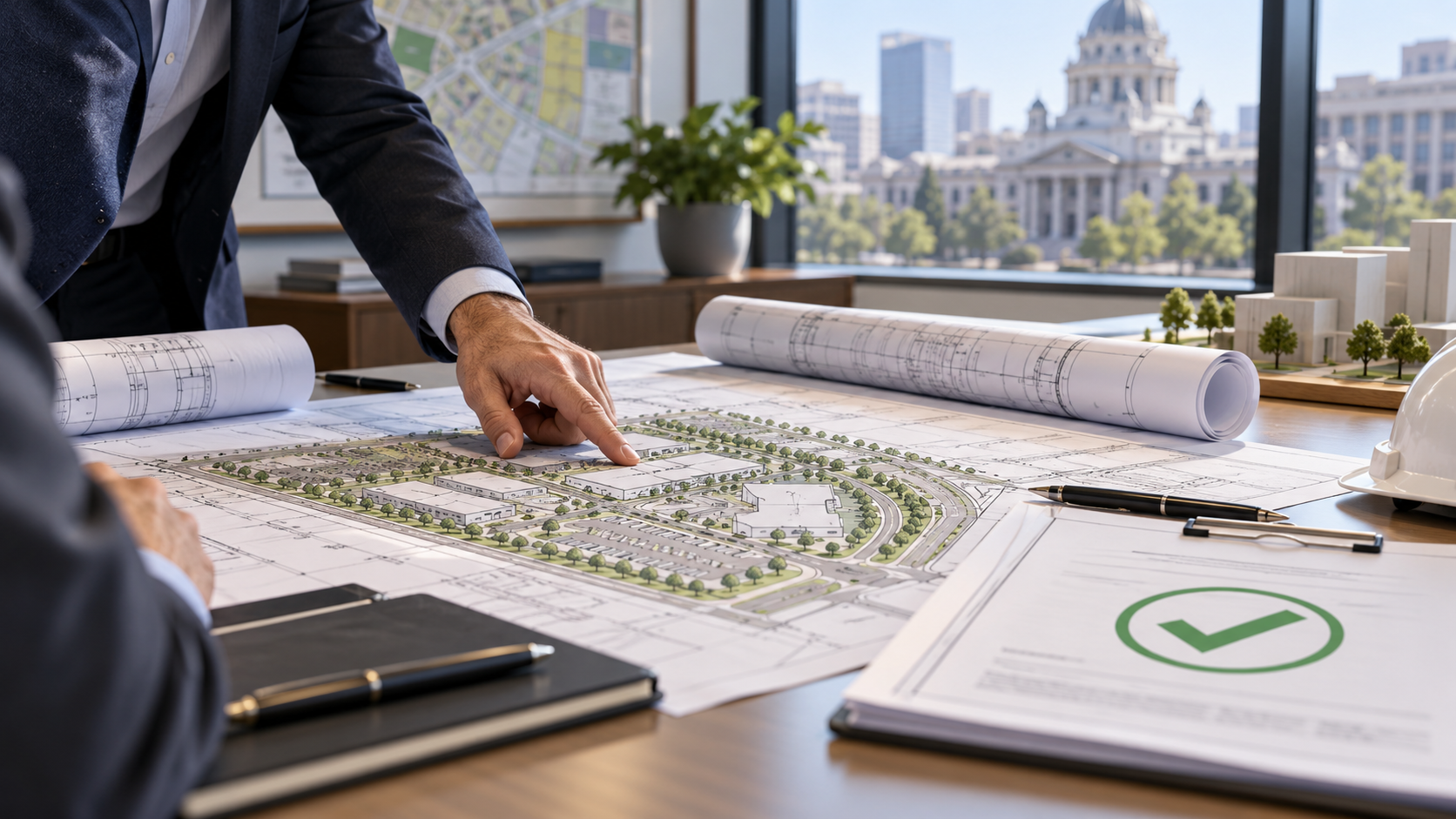
Entitlements are the approvals needed to legally develop or use a property as intended.
Depending on the project, entitlement work may include zoning changes, subdivision platting, site plan approval, special use permits, variances, development agreements, utility agreements, or other local approvals.
Buyers should identify:
- What approvals are required?
- Which entity controls the approval?
- What studies or plans are needed?
- Is public hearing approval required?
- Are there neighborhood or political concerns?
- What is the expected timeline?
- What are the approval risks?
- Can the purchase contract account for these risks?
A site may still be a strong opportunity even if entitlements are needed, but buyers should understand the process before closing.
9. Off-Site Improvements
Some development sites require improvements beyond the property boundaries.
These off-site improvements can materially affect project cost and timing. They may include road widening, turn lanes, utility extensions, drainage improvements, traffic signals, sidewalks, or shared infrastructure.
Buyers should evaluate whether the project may require:
- Road improvements
- Turn lanes
- Traffic signals
- Sidewalks
- Utility extensions
- Water or wastewater upgrades
- Drainage improvements
- Easement acquisition
- Off-site detention
- Fire access improvements
- Shared infrastructure contributions
Off-site improvements can turn an otherwise attractive site into a more expensive project. They should be identified early during due diligence.
10. Permitting Timeline
A development-ready site should have a realistic permitting timeline.
Permitting can involve city staff, county officials, TxDOT, utility providers, engineers, fire marshals, health departments, drainage reviewers, environmental consultants, and other parties. The timeline can vary significantly depending on the site, use, jurisdiction, and complexity of the project.
Buyers should understand the timeline for:
- Platting
- Rezoning
- Site plan approval
- Utility approvals
- Driveway permits
- Drainage review
- Building permits
- Fire marshal review
- Health department review
- Environmental review
- Construction inspections
- Certificate of occupancy
A common mistake is assuming a project can begin shortly after closing. In reality, permitting and approvals can shape the entire development schedule.
How to Evaluate Commercial Land Before Buying
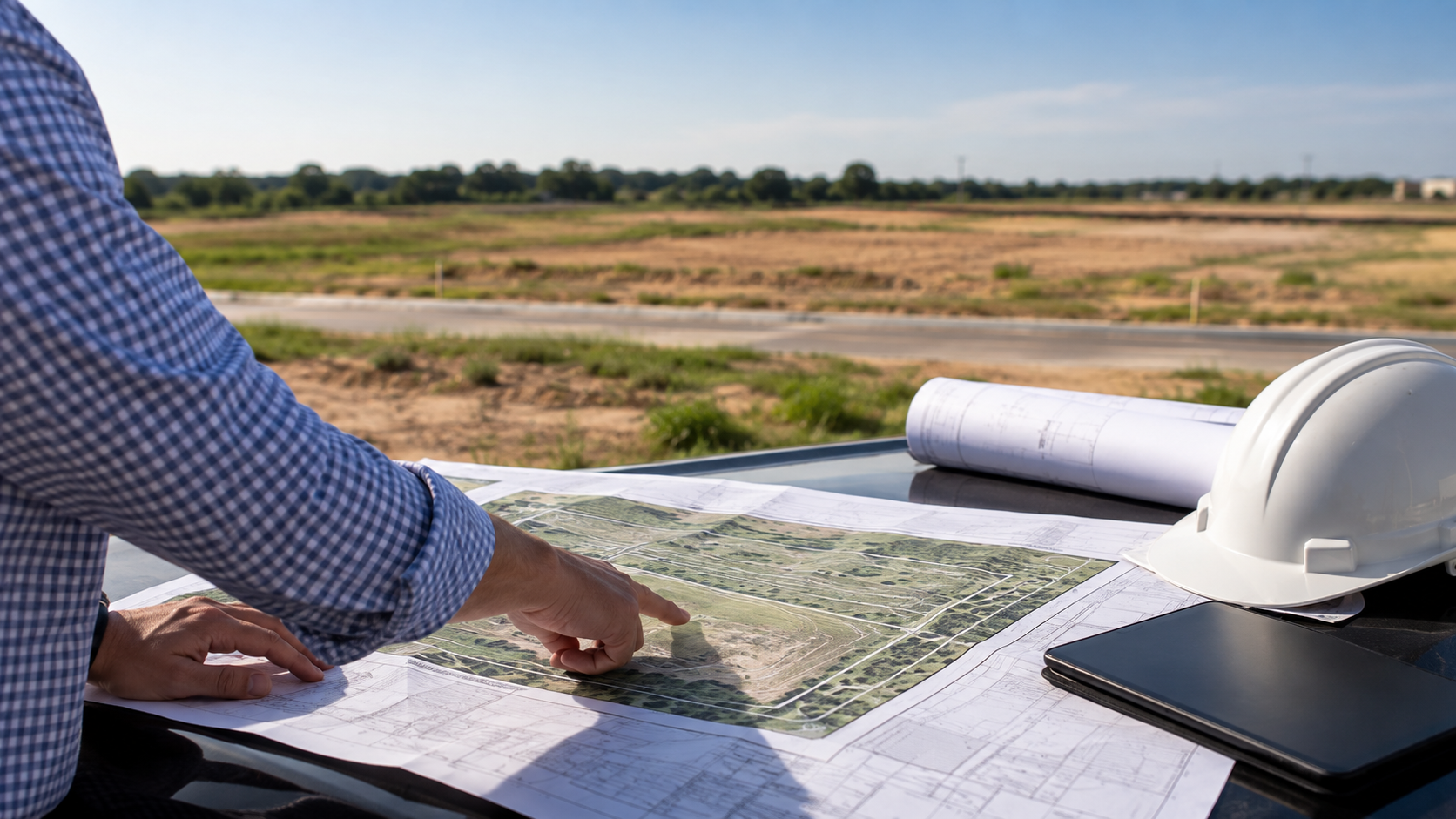
When evaluating commercial land in Texas, buyers should move beyond asking, “Is this a good location?”
A better question is:
Can this site support the intended project from a legal, physical, utility, access, drainage, financial, and timing standpoint?
A practical evaluation should include:
- Define the intended use
- Confirm zoning and jurisdiction
- Review title and survey
- Verify utility availability and capacity
- Review access and road requirements
- Evaluate drainage and floodplain
- Identify required entitlements
- Estimate off-site improvement costs
- Build a realistic permitting timeline
- Confirm the financial impact of all site constraints
This process helps buyers understand what they are truly purchasing and what it may take to get the project built.
Development-Ready Site Checklist for Texas Buyers
Before buying commercial land in Texas, buyers should review:
- Current zoning and allowed use
- City, county, and ETJ status
- Title commitment and survey
- Easements and deed restrictions
- Water availability and capacity
- Wastewater or septic feasibility
- Electric service and power capacity
- Gas and telecom availability
- Legal and practical access
- Frontage and curb cuts
- TxDOT, city, or county road requirements
- Drainage patterns and detention needs
- Floodplain or floodway constraints
- Entitlement requirements
- Platting or replatting needs
- Site plan requirements
- Off-site improvements
- Permitting timeline
- Development costs and contingency
- Exit strategy
This checklist can help buyers, developers, and investors evaluate whether a site is truly ready for development or whether additional time, cost, and risk need to be factored into the deal.
The Bottom Line
A development-ready site is not just a piece of land in a good location. It is a property that has been evaluated for zoning, utilities, access, drainage, floodplain, title, survey, entitlements, off-site improvements, and permitting timeline.
For buyers, developers, investors, and owner-users, understanding these issues early can help reduce surprises, protect capital, and create a more realistic development plan.
CIP helps clients evaluate commercial land, development sites, and investment opportunities throughout Central Texas. Whether you are reviewing a retail pad site, industrial land, mixed-use opportunity, owner-user property, or future development site, understanding development readiness early can help you make a more informed real estate decision.
REQUEST YOUR CONSULTATION