August 14, 2026
Commercial Real Estate Due Diligence Checklist for Texas Buyers

Buying commercial real estate in Texas can be a strong investment, but the real value of a property is not always obvious from the listing, location, or asking price.
A site may look ideal on paper. The building may appear functional. The land may seem ready for development. But before closing, buyers need to understand what they are actually purchasing, what risks exist, and whether the property can support their intended use.
That process is called due diligence.
For Texas buyers, commercial real estate due diligence is one of the most important steps in the purchase process. It helps buyers evaluate title, survey issues, zoning, utilities, access, easements, environmental conditions, floodplain risk, taxes, leases, permitting timelines, and exit strategy before committing to the deal.
What Is Due Diligence in Real Estate?
Due diligence in real estate is the investigation period when a buyer reviews the property, documents, risks, costs, and development potential before closing.
In commercial real estate, due diligence helps answer questions such as:
- Can the property legally be used for the buyer’s intended purpose?
- Are there title, survey, or easement issues?
- Does the site have adequate utilities and access?
- Are there environmental concerns?
- Is the property located in a floodplain?
- Are current leases, rents, expenses, and taxes accurate?
- What improvements, permits, or approvals will be required?
- Does the investment still make sense after reviewing all major risks?
The goal is not just to confirm that a property exists and can be purchased. The goal is to understand whether it is a sound commercial real estate decision.
How to Evaluate Commercial Property Before Buying

Commercial property should be evaluated from multiple angles. Price and location matter, but they are only part of the picture.
A strong due diligence review should consider legal, physical, financial, environmental, operational, and exit-related factors. For development land, the review should also include zoning, utilities, access, floodplain, site constraints, and permitting timeline.
Below is a practical commercial real estate due diligence checklist for Texas buyers.
1. Title Review
Title review helps confirm who owns the property and whether any recorded issues could impact the buyer’s rights.
During title review, buyers should look for:
- Ownership history
- Liens
- Deed restrictions
- Easements
- Encumbrances
- Mineral rights issues
- Access rights
- Existing agreements affecting the property
- Exceptions listed in the title commitment
Title issues can affect financing, development plans, access, future resale, and the ability to use the property as intended. Buyers should review the title commitment carefully with the right advisors before closing.
2. Survey Review
A survey shows the physical boundaries and improvements on the property. For commercial properties, buyers often need an updated survey to understand what is actually being purchased.
A survey can help identify:
- Boundary lines
- Building locations
- Parking areas
- Driveways
- Easements
- Encroachments
- Setbacks
- Fences
- Utility locations
- Access points
- Potential conflicts with neighboring properties
For land buyers and developers, the survey is especially important because it can impact site planning, usable acreage, access, and future development feasibility.
3. Zoning and ETJ Status

Zoning determines how a property can be used. In Texas, buyers should also consider whether the property is inside city limits, within an extraterritorial jurisdiction, or in an unincorporated area.
This matters because development requirements can vary depending on the location.
Buyers should confirm:
- Current zoning classification
- Allowed uses
- Conditional or special use requirements
- Development Standards
- Parking requirements
- Building height limits
- Setbacks
- Impervious cover limits
- Signage rules
- Whether rezoning may be required
- Whether the property is in a city, county, ETJ, district, or special jurisdiction
A property may be marketed for a certain use, but that does not always mean the use is currently allowed. Zoning and entitlement issues should be reviewed early in the due diligence period.
4. Utility Availability and Capacity
Utility availability is one of the biggest factors in Texas land development and commercial property evaluation.
A site may appear development-ready, but if water, wastewater, electric service, drainage, or telecom infrastructure is limited, the project may become more expensive or difficult to complete.
Buyers should review:
- Water availability
- Wastewater or septic options
- Electric capacity
- Gas availability, if needed
- Telecom/fiber access
- Fire flow requirements
- Utility provider boundaries
- Connection points
- Extension costs
- Upgrade requirements
- Service timelines
Utility capacity is especially important for industrial users, restaurants, medical users, multifamily projects, data centers, and other properties with higher infrastructure needs.
For power-heavy users, timing can be just as important as availability. Across Texas, data center activity and large-load demand have made power availability and grid connection timing more important in site selection.
5. Access and Easements
A commercial property needs legal and practical access.
A site may have frontage, but that does not always mean the buyer has the access needed for the intended use. Driveway spacing, shared access agreements, private roads, cross-access easements, or TxDOT requirements can all affect a property’s value and usability.
Buyers should evaluate:
- Legal access
- Existing curb cuts or driveway permits
- Shared access easements
- Cross-access agreements
- Ingress and egress
- Truck access
- Turn lanes
- Road frontage
- Traffic flow
- Visibility
- Future road improvements
- Access restrictions
For retail, industrial, warehouse, and development properties, access can be a major value driver. It can also be a major deal risk if not reviewed carefully.
6. Environmental Reports
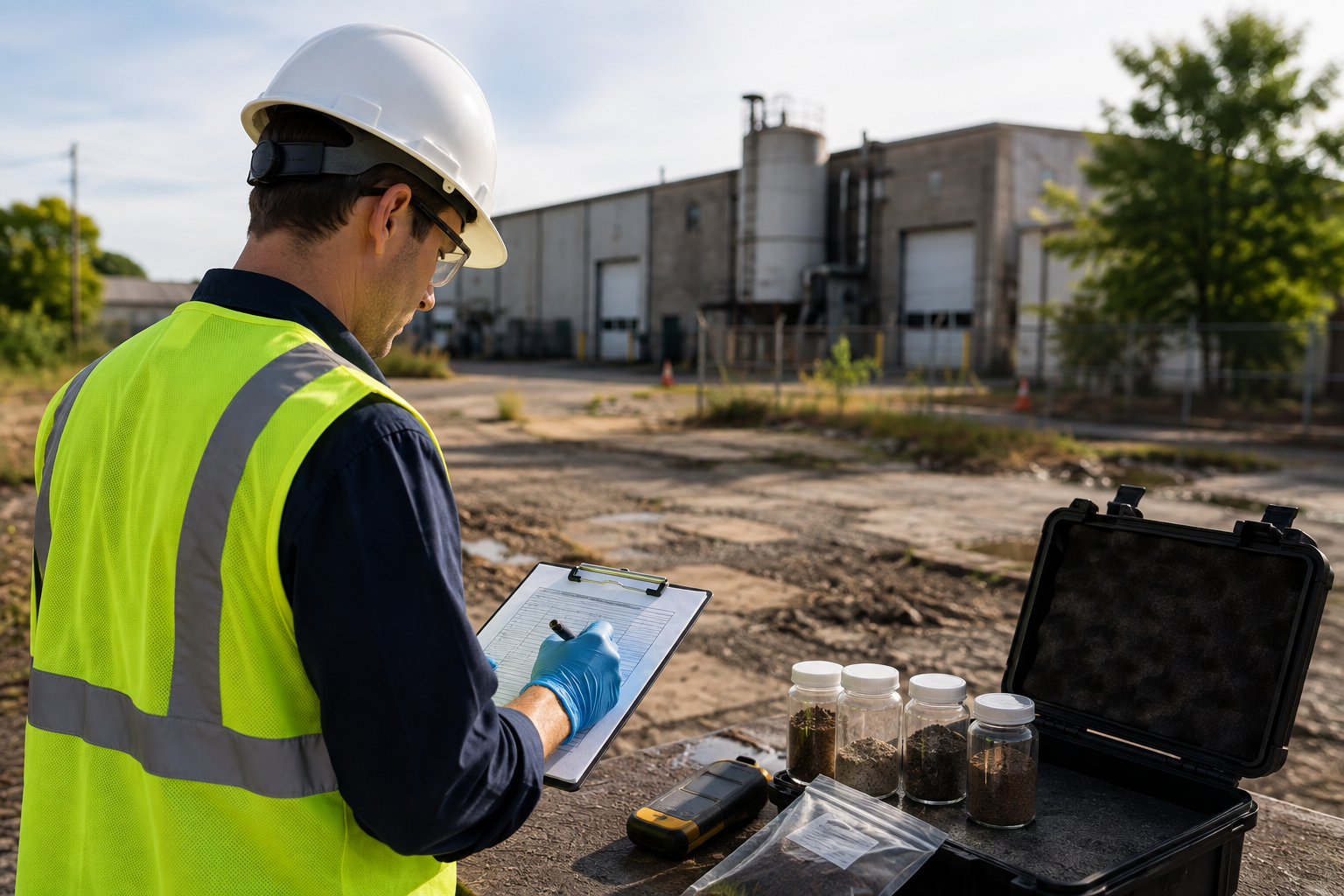
Environmental due diligence helps identify potential contamination or environmental concerns that may affect the property.
For many commercial transactions, buyers order a Phase I Environmental Site Assessment. ASTM’s E1527-21 standard defines good commercial and customary practice for Phase I Environmental Site Assessments involving commercial real estate and the evaluation of hazardous substances and petroleum products under CERCLA.
A Phase I ESA may review:
- Current and historical property uses
- Nearby properties
- Regulatory database records
- Site observations
- Historical aerials
- Sanborn maps, when available
- Interviews
- Recognized environmental conditions
Environmental issues are especially important for properties with current or past industrial, automotive, dry cleaning, gas station, agricultural, or manufacturing uses.
If concerns are identified, the buyer may need additional investigation, such as a Phase II Environmental Site Assessment.
7. Floodplain and Drainage Review
Floodplain and drainage issues can significantly impact development feasibility, insurance costs, site design, usable acreage, and long-term risk.
Buyers should review FEMA flood maps, local drainage requirements, detention needs, topography, flood history, and downstream conditions. FEMA flood maps are a useful starting point, but buyers should not assume they tell the full story. Recent reporting in Texas has highlighted that flood risk can be underestimated or shift as development patterns, drainage conditions, and mapping assumptions change.
Buyers should evaluate:
- FEMA floodplain designation
- Local floodplain rules
- Drainage easements
- Detention requirements
- Water quality requirements
- Topography
- Creek or drainage channel proximity
- Historical flooding
- Impervious cover limitations
- Buildable acreage after drainage requirements
For development land, floodplain and drainage review should happen early. These issues can reshape the site plan and reduce the amount of usable land.
8. Property Taxes
Texas commercial property taxes can have a major impact on the overall investment.
Buyers should review current taxes, assessed value, exemptions, special assessments, tax districts, and the likelihood of reassessment after purchase.
Important questions include:
- What are the current property taxes?
- Is the assessed value below market?
- Will taxes increase after the sale?
- Are there special districts or assessments?
- Are there rollback tax risks?
- Are there agricultural exemptions?
- How do taxes affect the projected return?
- Does the pro forma account for realistic future taxes?
A property may look profitable at current tax levels, but the numbers can change after reassessment or development.
9. Lease Review

For income-producing commercial properties, lease review is a critical part of due diligence.
Buyers should understand the lease terms, tenant obligations, landlord obligations, rent schedule, renewal options, expense reimbursements, and any unusual provisions that may affect value.
Lease review should include:
- Current rent roll
- Lease agreements
- Renewal options
- Rent escalations
- Security deposits
- Tenant improvement obligations
- Common area maintenance obligations
- Expense reimbursements
- Assignment and sublease rights
- Exclusives or restrictions
- Default history
- Estoppel certificates
- Tenant credit and payment history
A property’s value is tied to the quality and reliability of its income. Buyers should confirm that the leases support the purchase price and investment strategy.
10. Permitting Timeline
Permitting can affect when a buyer can start construction, open for business, or begin generating income.
In Texas, permitting timelines may involve city staff, county officials, utility providers, TxDOT, drainage review, fire marshal review, health department review, engineering review, or other agencies depending on the property and intended use.
Buyers should evaluate:
- Required permits
- Site plan approval
- Platting or replatting
- Building permits
- Utility approvals
- Driveway permits
- Drainage approvals
- Fire code review
- Environmental approvals
- Health department approvals
- Estimated timelines
- Likely bottlenecks
For development deals, permitting should be treated as a core feasibility issue, not an afterthought.
11. Financing and Cost Review
Due diligence should also confirm whether the project still works financially.
Buyers should review not only the purchase price, but the total cost of acquisition, ownership, improvement, and development.
This may include:
- Purchase price
- Closing costs
- Financing terms
- Interest rate assumptions
- Renovation costs
- Tenant improvement costs
- Site work
- Hard costs
- Soft costs
- Permitting costs
- Utility costs
- Insurance
- Taxes
- Holding costs
- Contingency budget
For owner-users, financing may also involve SBA loan options depending on the property type and business use. For investors and developers, the pro forma should be stress-tested against realistic costs, timelines, and exit assumptions.
12. Exit Strategy
A good real estate decision should consider the exit before the purchase is complete.
Buyers should ask:
- Who is the future buyer or tenant?
- Will the property appeal to multiple users?
- Is the location improving or weakening?
- Are there future infrastructure or road changes nearby?
- Can the property be repositioned if the original plan changes?
- Is the property financeable?
- Is the site too specialized?
- What could limit resale value?
- What is the downside scenario?
A property that only works under one narrow plan may carry more risk than a property with multiple viable paths.
How Long Does Due Diligence Take in Commercial Real Estate?
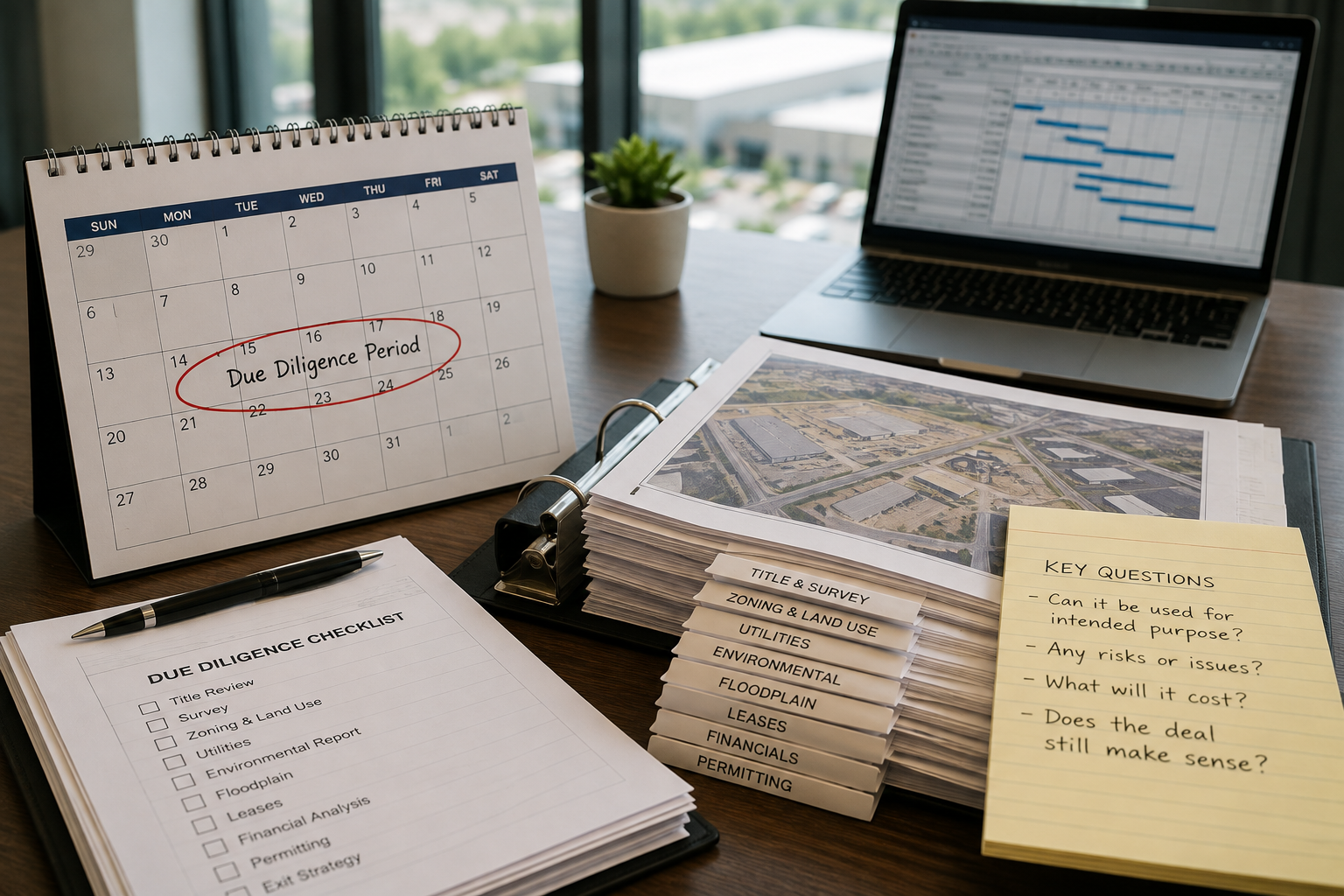
The length of due diligence depends on the property type, deal structure, financing, and complexity of the intended use.
For a straightforward commercial building, the due diligence period may be around 30 to 60 days. For land, development sites, industrial properties, or deals requiring zoning, utility review, environmental work, financing, or permitting analysis, due diligence may take longer.
Factors that can affect timing include:
- Title and survey review
- Environmental report timing
- Utility provider responses
- Engineering review
- Zoning or entitlement questions
- Lease review
- Financing requirements
- Floodplain or drainage issues
- Permitting complexity
- Seller document availability
The key is to negotiate enough time to complete the proper review before the buyer’s earnest money becomes non-refundable or before closing.
Commercial Real Estate Due Diligence Checklist for Texas Buyers
Here is a simple checklist buyers can use when evaluating commercial real estate in Texas:
- Review title commitment and exceptions
- Order or update the survey
- Confirm zoning and ETJ status
- Verify allowed uses
- Review water, wastewater, power, and utility capacity
- Confirm legal and practical access
- Review easements and encroachments
- Order environmental reports
- Review floodplain and drainage issues
- Analyze current and future property taxes
- Review leases and rent roll
- Confirm tenant obligations and income
- Estimate permitting timeline
- Review financing options
- Estimate hard costs, soft costs, and holding costs
- Confirm insurance requirements
- Review development feasibility
- Evaluate resale, leasing, or exit strategy
The Bottom Line
Commercial real estate due diligence helps Texas buyers understand what they are really purchasing before closing.
The process can uncover issues with title, survey, zoning, utilities, access, environmental conditions, floodplain, taxes, leases, permitting, costs, and future resale value. Some issues can be solved. Others can change the purchase price, deal structure, timeline, or overall investment strategy.
For buyers, investors, developers, and owner-users, the goal is not just to get a property under contract. The goal is to make an informed decision before taking on long-term risk.
CIP helps clients evaluate commercial properties, land opportunities, and development strategies throughout Central Texas. Whether you are buying an income-producing asset, an owner-user facility, or a future development site, understanding the due diligence process early can help protect your investment and keep the transaction moving in the right direction.

REQUEST YOUR CONSULTATION