May 18, 2026
Owner-User vs Investor
If you’re looking at buying commercial real estate in Texas right now, one of the first decisions you need to make is this:
Are you buying for your business, or are you buying purely as an investment?
That decision changes everything — financing, risk, control, and long-term upside.
There’s no one-size-fits-all answer. But there is a right answer depending on your situation.
Let’s break it down.
What Is an Owner-User?
An owner-user is a business that buys a property and occupies at least 51% of it.
Think:
- Contractors buying a shop/yard
- Medical practices buying their own building
- Small businesses tired of rising lease rates
You’re not just buying real estate — you’re buying control over your business location and expenses.
What Is an Investor?
An investor is buying property to generate income and appreciation, not to occupy it.
Think:
- Leasing to tenants
- Holding for appreciation
- Value-add plays (increase rents, improve property, reposition)
Your focus is return — not operational use.
Financing: This Is Where Everything Changes
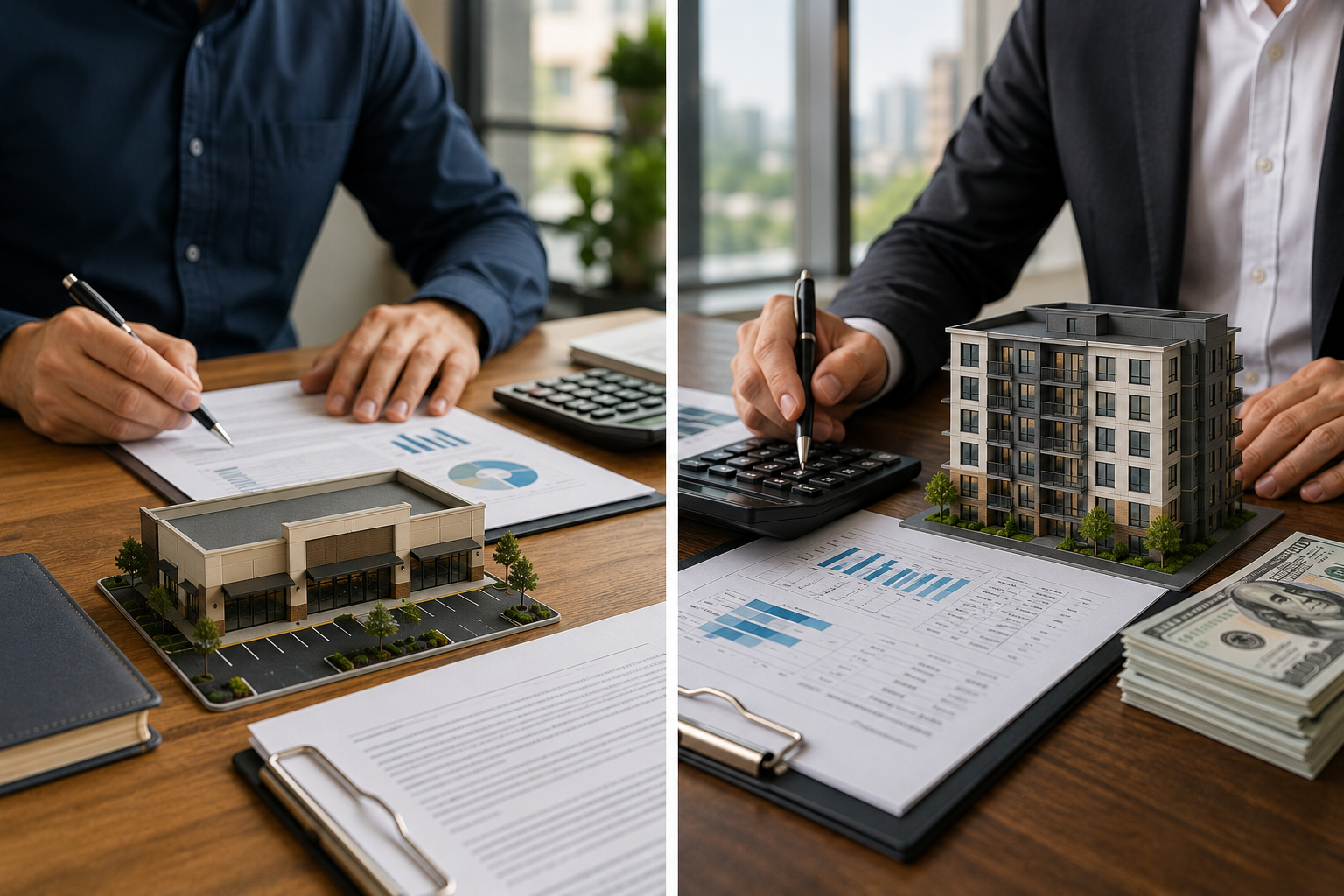
Owner-User Financing (SBA 504 & SBA 7(a))
- Put as little as 10% down
- Lock in long-term, fixed rates
- Get longer amortizations (20–25 years)
That’s a completely different game than traditional commercial lending.
👉 If you haven’t read it yet, this ties directly into our guide on
“Buying Commercial Property in Texas with an SBA 504 Loan”
Investor Financing (Traditional Commercial Loans)
Investors typically face:
- 20–30% down payment
- Shorter terms (often 5–10 year balloons)
- Higher sensitivity to rates and market conditions
Lenders are underwriting the deal based on:
- Property income
- Tenant strength
- Lease structure
You’re judged on the asset — not your business.
Control: The Underrated Advantage
A lot of buyers focus almost entirely on price, rates, and cash flow projections. But one of the biggest long-term advantages in commercial real estate is something less obvious: Control.
And this is where the difference between owner-users and investors becomes very real.
Owner-User = Full Control
When you own the building your business operates from, you remove a layer of uncertainty that many growing companies eventually get tired of dealing with.
You no longer have to worry about:
- Lease renewals every few years
- A landlord deciding not to renew your space
- Unexpected rent increases
- Restrictions on how you use or improve the property
You control the direction of the property and how it supports your business long term. That can mean:
- Expanding operations without renegotiating a lease
- Customizing the space for workflow or branding
- Adding equipment, storage, or specialized improvements
- Planning years ahead without wondering if you’ll need to relocate
For industrial users especially, this can be a huge advantage. Many Texas businesses outgrow leased spaces, run into parking or yard limitations, or invest heavily into improvements they ultimately don’t own.
Owning the property changes the mindset from:
“How do we make this space work for now?”
to:
“How do we build around where this business is going?”
For many owner-users, that stability and flexibility alone justifies the purchase — even before factoring in appreciation or equity growth.
Investor = Indirect Control
Investors still control the asset itself — but they don’t control the businesses occupying it.
That’s an important distinction.
As an investor, your success is still heavily tied to tenant behavior and market conditions.
You may own the building, but tenants ultimately influence:
- Occupancy levels
- Cash flow consistency
- Lease renewals
- Property stability
That means dealing with realities like:
- Vacancies between tenants
- Tenant turnover costs
- Leasing commissions
- Market rent fluctuations
- Businesses downsizing or failing
Even strong properties can experience periods of instability if the tenant mix changes or the market softens.
That’s why experienced investors focus heavily on:
- Location quality
- Tenant strength
- Lease structure
- Property type resilience
A well-located industrial property with long-term tenants may feel very stable. A speculative office or retail property may carry far more uncertainty.
Strong assets absolutely reduce risk — but investors are still dependent on tenant performance in a way owner-users typically are not.
Cash Flow vs Business Leverage
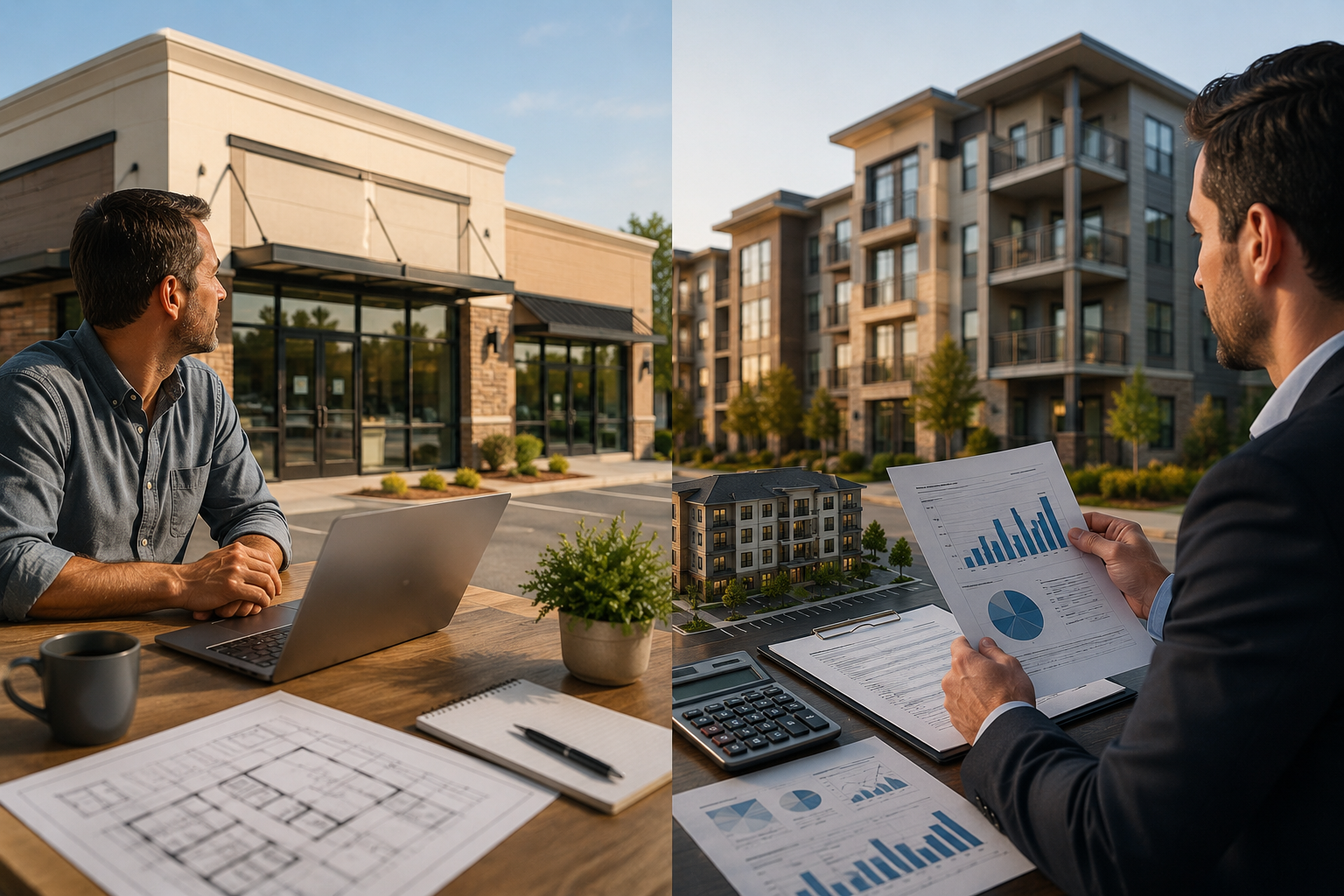
Owner-User
You’re not maximizing cash flow — you’re:
- Stabilizing occupancy costs
- Building equity instead of paying rent
- Potentially leasing out extra space
It’s a business decision first, investment second.
Investor
Your entire focus is:
- Cash flow
- ROI
- Appreciation
Every decision is tied to returns.
Long-Term Upside: Which Strategy Makes More Sense Right Now?
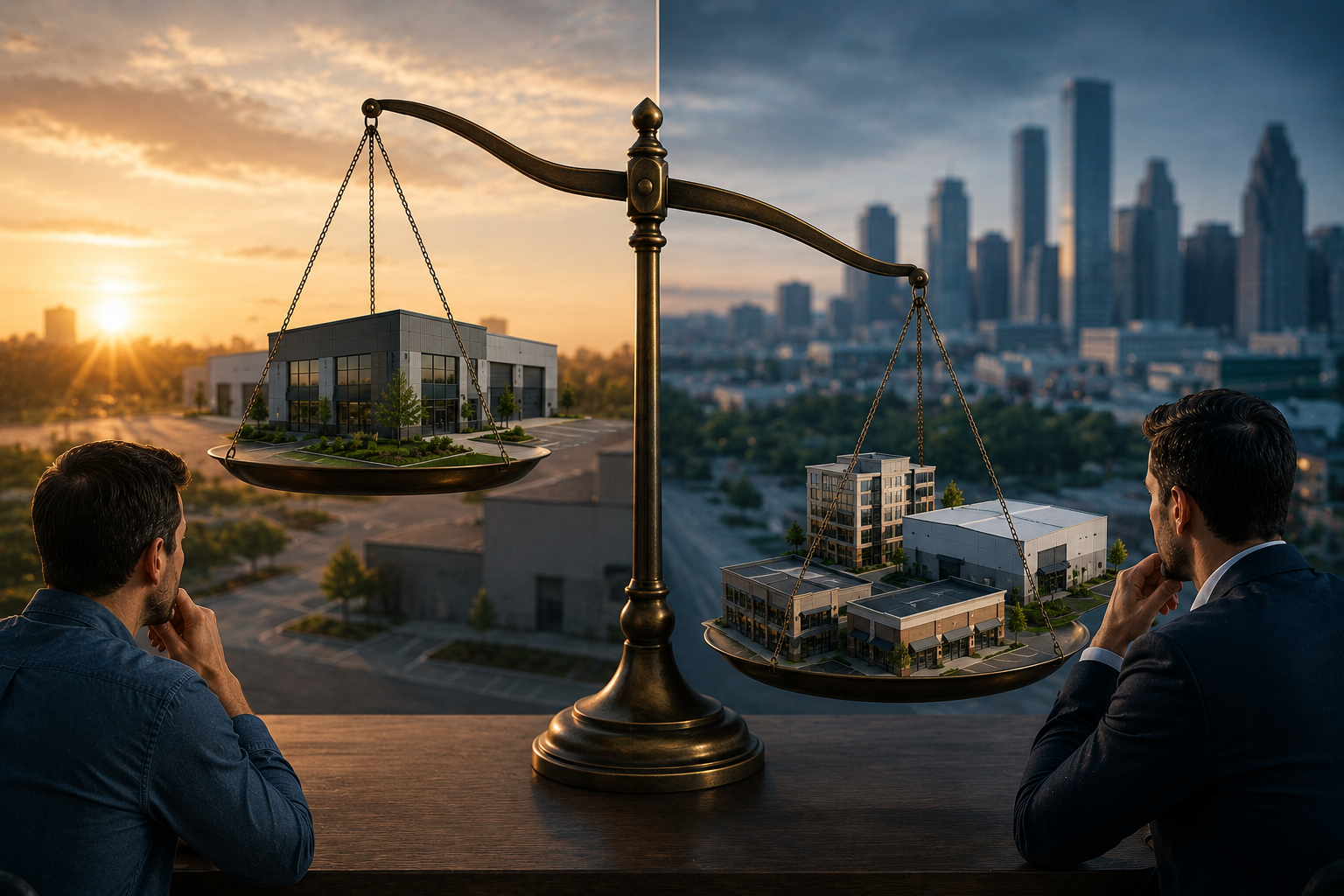
Both owner-users and investors can do very well in Texas commercial real estate — but they win in different ways.
For owner-users, the upside is often tied to:
- Long-term cost control
- Building equity instead of paying rent
- Protecting themselves from rising lease rates
- Growing their business into a property they control
With SBA financing still creating opportunities for lower down payments and longer-term fixed rates, many Texas businesses are starting to ask:
“Why am I renting when I could potentially own for a similar monthly cost?”
That question is driving a lot of owner-user activity right now, especially in industrial and service-based properties.
Investors, on the other hand, are focused more on:
- Cash flow
- Appreciation
- Increasing rents and property value
- Finding strong locations with stable tenants
But today’s market requires more discipline than it did a few years ago.
Interest rates are still a factor, some sectors are seeing softness or oversupply, and investors are becoming far more selective about what they buy.
The strongest opportunities are typically coming from:
- Well-located industrial properties
- Service-oriented commercial assets
- Markets with strong population and business growth
At the end of the day, neither strategy is universally “better.”
Owner-user tends to make the most sense if:
- You have a stable, growing business
- You want more control over your future occupancy costs
- You plan to stay in one location long term
- You want to leverage SBA financing advantages
Investor tends to make more sense if:
- You’re focused on scalability and returns
- You understand market cycles and risk
- You’re comfortable managing vacancies and tenant turnover
- You have capital ready to deploy strategically
In reality, many of the smartest commercial real estate buyers in Texas eventually combine both strategies. They start by owning the building their business operates from to gain long-term stability and control, then expand into additional income-producing properties over time. That combination can create a powerful mix of equity growth, operational control, appreciation potential, and recurring income streams.
Need Help Deciding?
At Commercial Industrial Properties (CIP Texas), we help clients evaluate both sides of the equation — not just find deals.
If you’re considering buying commercial property in Texas, we can help you:
- Compare owner-user vs investment opportunities
- Analyze financing options
- Identify the right markets and property types

REQUEST YOUR CONSULTATION