March 17, 2026
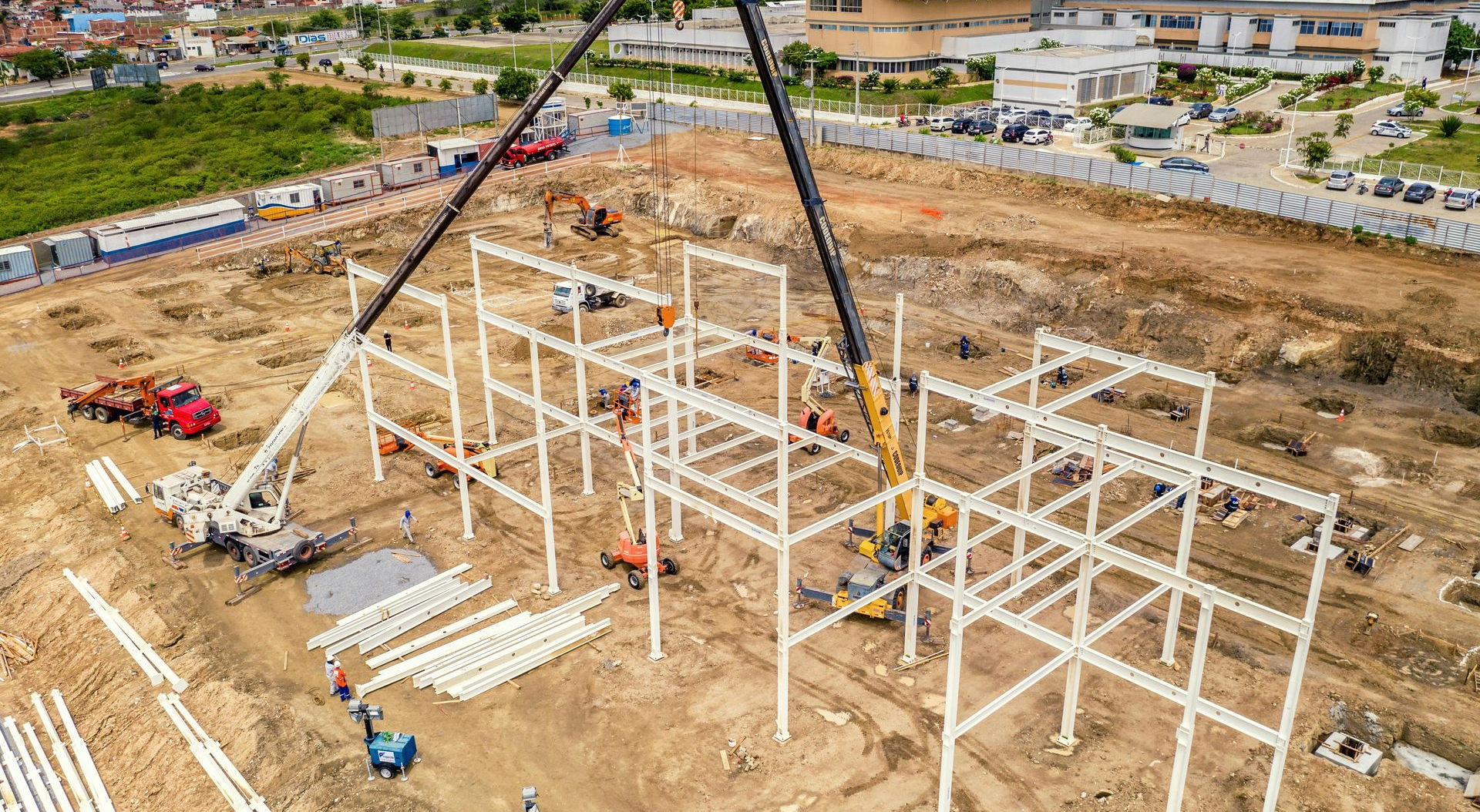
Land Development Timelines
Buying land is exciting. Turning it into a finished, income-producing property? That’s where patience, planning, and the right team matter most.
In Texas, land development can move faster than many other states — but it still involves multiple phases, approvals, and coordination points. Whether you're developing industrial, retail, office, or mixed-use property, understanding the full timeline helps you avoid surprises and budget properly.
Below is a realistic look at what to expect from contract to construction.
Phase 1: Contract & Feasibility (30–90 Days)
Once a land purchase contract is signed, the real work begins.
This is your due diligence window — and it’s critical.
- Title commitment review
- Survey review
- Zoning verification
- Utility availability confirmation
- Environmental studies (Phase I, sometimes Phase II)
- Floodplain analysis
- Access and easement review
- Preliminary site layout or concept planning
This is also when investors confirm:
- Is the site usable for the intended project?
- Are there hidden costs (detention, offsite improvements, impact fees)?
- Will the timeline align with financing?
Planning Tip:
Budget for consultants early — civil engineers, environmental firms, surveyors, and land-use attorneys. Rushing this phase often creates expensive problems later.
Phase 2: Entitlements & Permitting (3–9+ Months)
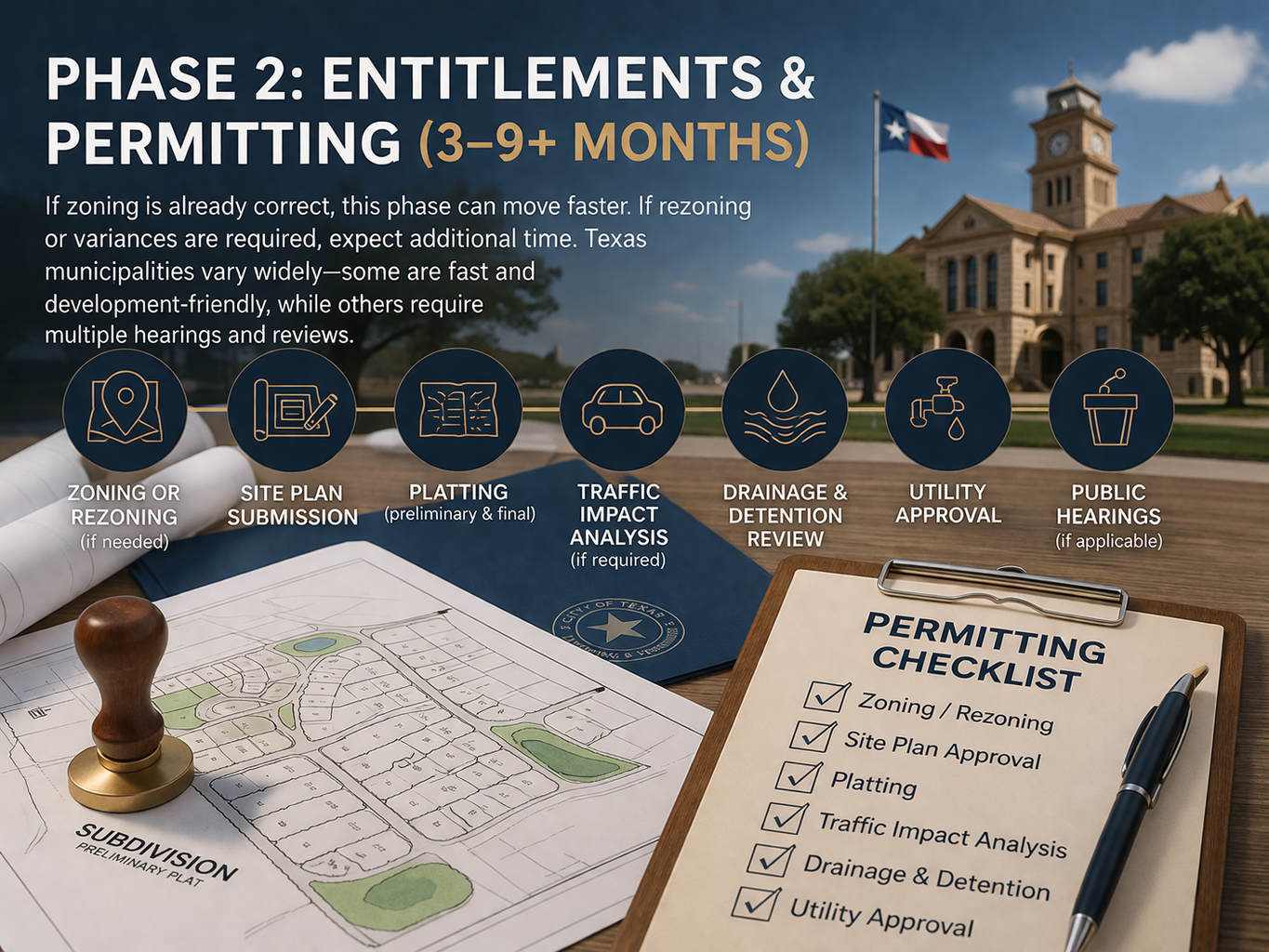
Typical Steps:
- Zoning or rezoning (if needed)
Confirm the property allows your intended use. If rezoning or a special permit is required, expect staff review and possible public hearings.
- Site plan submission
Submit detailed plans showing building layout, parking, access, landscaping, and compliance with city development standards. Revisions are common.
- Platting (preliminary and final)
If the land must be subdivided or reconfigured, plats must be approved and recorded before permits can be issued.
- Traffic impact analysis (if required)
Larger projects may need a traffic study to determine roadway impact and required improvements.
- Drainage and detention review
Engineers must prove the project meets stormwater regulations and does not increase downstream flooding.
- Utility approval
Confirm water, sewer, electric, and other utility capacity before construction begins.
- Public hearings (if applicable)
Rezoning or variances may require planning commission and city council approval.
This phase is often the longest and most unpredictable part of the process.
Planning Tip:
Engage local professionals who understand the specific city or county requirements. Local knowledge saves months.
Phase 3: Engineering & Construction Drawings (2–4 Months)
While entitlements are underway (or once approved), civil engineers prepare detailed plans for:
- Grading
- Drainage
- Utilities
- Roads and access
- Stormwater management
- Detention ponds
- Erosion control
These plans must meet municipal standards and are typically reviewed by city engineers before construction permits are issued.
Planning Tip:
Engineering costs are higher than many first-time developers expect. Build this into your upfront capital stack.
Phase 4: Financing & Contractor Bidding (1–3 Months)
During or after permitting:
- Finalize construction financing
- Issue drawings to general contractors
- Review bids
- Negotiate contracts
- Lock in timelines
Material pricing, labor availability, and supply chain conditions can affect construction start dates.
Planning Tip:
Have financing lined up early. Delays between permitting and funding can stall momentum.
Phase 5: Site Work & Construction (4–12+ Months)
Now the visible progress begins.
Site Work Includes:
- Clearing and grubbing
- Earthwork
- Utility installation
- Road construction
- Detention pond construction
Once vertical construction begins, timelines vary depending on property type:
- Industrial warehouse: 6–9 months
- Retail strip center: 6–10 months
- Office building: 8–12 months
- Build-to-suit: Depends on tenant requirements
Weather, inspections, and change orders can extend timelines.
Total Timeline Overview
From contract to completion, most Texas land development projects take:
9 to 18 months, depending on:
- Zoning complexity
If the property is already properly zoned, timelines move faster. Rezoning, special use permits, or variances can add months due to staff review and public hearings.
- Municipality
Each Texas city has its own review process, staffing levels, and development standards. Some move quickly and predictably; others require multiple review cycles.
- Infrastructure needs
Projects requiring new roads, utility extensions, detention ponds, or off-site improvements typically take longer than sites with existing infrastructure in place.
- Property type
Industrial buildings may move faster than retail or mixed-use projects, which often face additional design, parking, or traffic requirements.
- Financing structure
Straightforward financing can keep momentum steady. Complex capital stacks, lender requirements, or funding delays can slow progress.
Highly complex or rezoning-heavy projects may extend beyond 18 months.
Common Delays to Plan For
Even in Texas, which is generally development-friendly, delays happen:
- Utility capacity issues
- Drainage or detention redesign
- Rezoning opposition
- Title complications
- Environmental findings
- Contractor availability
- Material lead times
The key is not eliminating delays — it's planning for them.
How to Plan for Each Phase Successfully
- Start with a clear end goal.
Know your exit strategy — lease, hold, or sell. - Build a strong development team early.
Broker, civil engineer, land-use attorney, lender, contractor. - Pad your timeline.
If you need 12 months, plan for 15. - Carry contingency reserves.
Development always costs more than initial projections. - Communicate regularly with municipalities.
Proactive communication speeds approvals.
Final Thoughts
Land development in Texas offers tremendous opportunity. Population growth, business-friendly policies, and strong demand across industrial and retail sectors make it an attractive environment for investors and owner-users alike.
But success comes down to understanding the process.
When you know what happens between contract and construction, you can make better decisions, protect your capital, and move confidently through each stage of development.
If you’re evaluating land or planning a project, working with experienced commercial real estate professionals can help streamline the process and avoid costly missteps.
The right preparation makes all the difference. Contact CIP to get started on the right path today!

REQUEST YOUR CONSULTATION